REVIEW · TAURANGA
7 Hours Te Puia Rotorua Tour from Tauranga with Concert
Book on Viator →Operated by BOP Trips · Bookable on Viator
Rotorua can feel far from Tauranga, until you do it in one day. This tour turns that inland trip into a tight circuit, with Te Puia as the main event and Māori culture built into the geothermal experience. I like that the itinerary mixes big-name sights with smaller, food-and-nature stops like a kiwi orchard.
Here’s the main thing to weigh: the tour is supposed to include live commentary, but the driving portion has had uneven narration quality, so you may want to go in with realistic expectations about the road time.
In This Review
- Key takeaways before you book
- Tauranga to Rotorua in one day: why this route works
- Te Puia: geothermal valley, Māori Arts and Crafts Institute, and what you’ll really see
- Pohutu Geyser: the main spectacle and how to handle the timing
- Kiwi viewing and the Te Puke orchard: nature you can’t quite rush
- Rotorua shortcuts: Lake Rotorua, city sights, and quick breaks
- Mount Maunganui and the return plan: fitting the day around shore time
- Kapa haka at Te Puia: the cultural part that shouldn’t be skipped
- Hot-pool meal expectations: plan for lunch costs
- Transport and narration: where the experience can swing
- Price and value: does $170.66 make sense?
- Who this tour is best for (and who should look elsewhere)
- Should you book the 7 Hours Te Puia Rotorua Tour from Tauranga?
- FAQ
- What does the tour include?
- Is pickup available from Tauranga?
- How long is the tour, and what time does it start?
- How long do you spend at Te Puia?
- Is lunch or food included?
- How big is the group?
- Can I cancel for a full refund?
Key takeaways before you book
- Te Puia admission is included, so you’re not guessing about entry fees once you’re there.
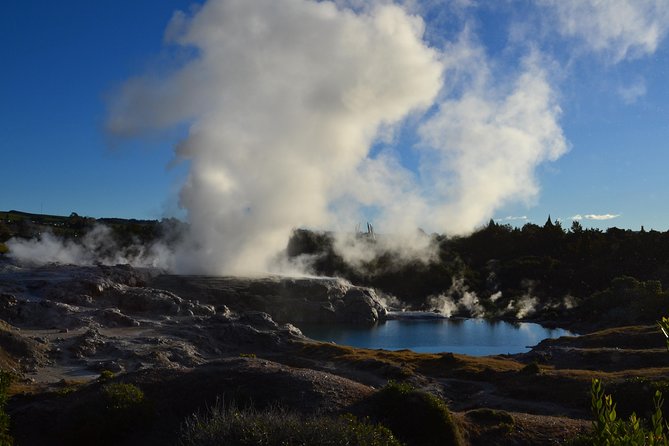
- Geothermal highlights are the center of the day, including the famous Pohutu Geyser area.
- Kiwis are a real possibility thanks to a purpose-built habitat, plus a quick kiwi fruit orchard stop at Te Puke.
- Māori kapa haka performance is part of what you’ll see during the Te Puia visit.
- Small group size (max 11) makes it more likely you’ll hear what’s going on and keep the day moving.
- Food is not included, even though the program description talks about a hot-pool-style meal, so plan for lunch costs.
Tauranga to Rotorua in one day: why this route works

If you’re starting in Tauranga, the big win here is how efficiently the tour gets you inland. Instead of piecing together transport and tickets on your own, you get picked up in the morning and carried to Rotorua for a focused day, then returned to your starting point.
You also get two kinds of value out of the schedule. First, you spend the bulk of your time at Te Puia—where the geothermal activity and the Māori Arts and Crafts Institute are actually the point. Second, the tour still builds in enough time for Rotorua sightseeing moments and a return to Tauranga with a chance to shop or sightsee on your way back.
It’s not a “do everything in New Zealand” day. It’s a do-the-very-important-things day.
Te Puia: geothermal valley, Māori Arts and Crafts Institute, and what you’ll really see
Te Puia isn’t just about steam. It’s about how the geothermal world connects to Māori life and tradition, and that’s where this tour earns its keep. You’ll be guided through the thermal valley at Te Puia, then spend real time in an area known for the Māori Arts and Crafts Institute.
This is one of those experiences where the guide matters. The geothermal is dramatic, but what sticks for most people is the explanation—how Te Puia is presented as both a living cultural center and a working geothermal site. On this tour, that meaning is built into the visit, not treated like a quick stop.
What I like about the way this day is structured: Te Puia is long enough to feel like a destination. You’re not just driving past steam and hoping it’s enough.
One practical consideration: Te Puia involves moderate walking around active geothermal areas. The tour notes moderate physical fitness is expected, so wear shoes you can trust on uneven ground.
Pohutu Geyser: the main spectacle and how to handle the timing
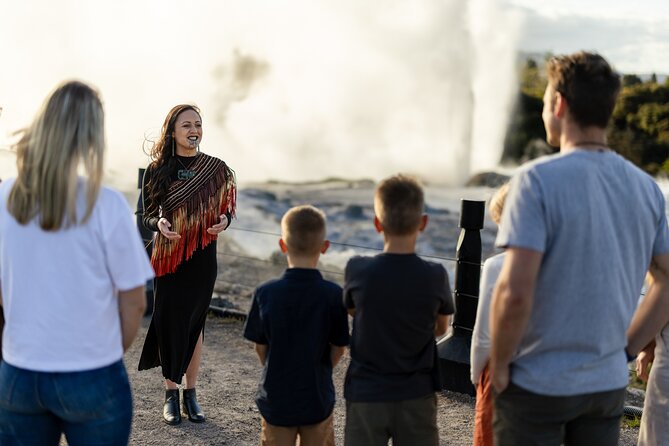
The listing highlights Pohutu Geyser, and that’s the big star most people come for. In places like this, geyser viewing is all about timing and attention. Even without promising a specific eruption moment, the tour experience is centered on giving you time in the geyser area so you can catch the action.
Your best move is simple: don’t treat this like a photo-only stop. If you pay attention to where you’re standing and listen to the guide’s directions, you’ll get more out of the viewing area than people who show up late or wander off.
Also, keep your expectations grounded. Geysers are geothermal phenomena, not a stage show on a clock. The value here is the sustained time on-site and the explanations that help you understand what you’re seeing.
Kiwi viewing and the Te Puke orchard: nature you can’t quite rush
Rotorua has a way of making wildlife feel personal, and this tour leans into that with kiwi-focused stops. At Te Puia, you may get to see a brown kiwi bird in a purpose-built habitat. That kind of viewing is exactly what makes a guided day trip worth it—someone helps you find the best way to experience it.
Then there’s the Te Puke kiwi fruit orchard stop. It’s short—about 15 minutes—but it gives you a quick look at kiwi vines and the growing story behind the Bay of Plenty’s best-known export. If you like food culture tied to place, this adds a satisfying layer to the day.
One caution: a kiwi habitat visit can be hit-or-miss depending on the birds and the moment. Think of it as a chance, not a guaranteed sighting. The orchard stop is more predictable, and it helps round out the nature side of the day.
Rotorua shortcuts: Lake Rotorua, city sights, and quick breaks
You won’t spend all day touring Rotorua’s streets. Instead, the tour uses small timing windows to let you see key viewpoints—especially Lake Rotorua. You’ll get a general sightseeing pass with quick looks around the lakefront, city center, and government gardens, plus mention of a Polynesian spa view.
Those time-boxed stops are useful if you’re deciding what you’d want to revisit later. If you’re only in the area for one day, they help you get your bearings fast. If you’re staying longer, they’re a preview—enough to point you toward a second visit you can plan on your own.
If you want a slower pace and lots of photo stops, you might feel the time compression here. But for a day designed around Te Puia, this pacing makes sense.
Mount Maunganui and the return plan: fitting the day around shore time
This tour also acknowledges Tauranga’s schedule reality. It includes pickup from the Gates of the Port of Tauranga, and it notes that if you’re not on a cruise, pickup can be arranged at another suitable point. That matters because shore excursions live and die by timing.
You’ll also have a stop at Mount Maunganui during the tour, with time built in for a first stretch of the day. It’s not positioned as a long beach day; it’s more like an orientation moment before you head deeper into the Rotorua region.
And here’s a practical highlight: the tour is designed so you don’t miss the rest of Tauranga life on your return. If you like to keep an evening open for shopping, casual dining, or just a relaxed coastal walk, this structure helps.
Kapa haka at Te Puia: the cultural part that shouldn’t be skipped
Te Puia is where the geothermal story and the Māori cultural story meet, and kapa haka is one of the clearest ways you’ll feel that connection. The performance isn’t an add-on; it’s part of what you’re expected to experience during the Te Puia visit.
Even if you don’t know the dance forms or songs ahead of time, the key is to treat it as live culture, not entertainment-with-a-captions problem. Sit where you can see clearly and let the guide’s framing help you understand what you’re watching.
This is one of the reasons I think the tour works better than a simple sightseeing bus day. It makes the day about people and meaning, not just scenery.
Hot-pool meal expectations: plan for lunch costs
The tour description points to food cooked traditionally in nearby hot pools, which sounds like the kind of experience you want to check out. But the tour details also state that food and drinks are not included, and lunch isn’t included.
So here’s how I’d handle it: treat the hot-pool meal as something you may be offered or available on-site, but don’t assume it’s covered in the price you see. If you’re budgeting tightly, bring backup funds for lunch or confirm what, if anything, is actually included in your specific booking.
This is one spot where clarity matters before you arrive, because no one likes being surprised mid-day.
Transport and narration: where the experience can swing
You’ll ride in an air-conditioned minivan, and the group size is kept small, up to 11 travelers. That’s a good setup for a day trip because it usually means fewer people competing for attention and easier movements between stops.
But the driving portion is the weak point to think about. The tour is described as having live commentary on the way, yet narration quality has been inconsistent—some departures have felt more like a rideshare transfer than a true mic-on-tour-guide experience.
My practical advice: don’t plan this day as your only source of cultural education. If you want deeper context, download a couple of short offline primers about Rotorua geothermal and Māori traditions ahead of time, so you can fill in gaps if the road commentary is light.
Also, if your guide is speaking, listen for the cues about what to prioritize when you arrive. On this type of itinerary, the “best version of the day” happens when you follow those instructions.
Price and value: does $170.66 make sense?
At $170.66 per person, this is not a budget transfer. The value comes from what’s bundled and how the day is paced.
Here’s what you are paying for that’s clearly part of the package:
- Te Puia entrance is included
- Transport by air-conditioned minivan
- Driver/guide and local guidance
- Live commentary on the way (with the caveat above)
- A structured day that hits Te Puia, kiwi orchard, and key Rotorua viewpoints
Is it worth it? If Te Puia is your priority, it likely is, because entry to major Rotorua attractions plus guided logistics are what make a day trip expensive when you do it yourself. If, however, you’re mainly interested in a couple of viewpoints and you don’t care about Māori culture or guided geothermal context, you might find a cheaper taxi-style approach more satisfying.
Think of it like this: pay for the convenience and guided depth at the biggest stop. If that’s your goal, this fits. If you’re chasing a flexible, fully narrated adventure with lots of roadside stops, you’ll want to set expectations.
Who this tour is best for (and who should look elsewhere)
This tour suits you if:
- You want a one-day Rotorua plan that starts from Tauranga
- Te Puia is on your list because you care about geothermal activity and Māori culture
- You like the idea of a kiwi-focused experience, even if sightings aren’t guaranteed
- You’d rather sit in a small group and let someone handle the driving
You might want a different style of tour if:
- You get cranky when road commentary is limited
- You plan to skip the cultural parts and only want beaches or long lake walks
- You’re expecting lunch to be fully included based on the hot-pool meal description—budget extra to stay comfortable
For a first time in the Rotorua area, this tour is a strong “starter day.” It helps you decide what’s worth a slower second visit.
Should you book the 7 Hours Te Puia Rotorua Tour from Tauranga?
I’d book it if your heart is set on Te Puia, geothermal sights, and Māori culture, and you want a day that’s organized enough to keep you from wasting hours coordinating transport. The fact that Te Puia entry is included and the day is built around that centerpiece is the main reason it works.
Before you book, do two quick checks in your mind:
- Are you okay with possible gaps in road narration? You can still have a great day if you treat the Te Puia time as the real payoff.
- Have you budgeted for food since lunch isn’t included?
If you hit those two points, you’ll likely come away happy that you turned Tauranga-to-Rotorua distance into one smooth day.
FAQ
What does the tour include?
The tour includes a driver/guide, a local guide, transport by air-conditioned minivan, entrance fee to Te Puia, and live commentary on the way.
Is pickup available from Tauranga?
Yes. Pickup is offered, and the tour notes collection from the Gates of the Port of Tauranga. If you are not traveling in a cruise ship, another pickup point can be arranged.
How long is the tour, and what time does it start?
The tour runs about 6 to 7 hours and starts at 10:00 am.
How long do you spend at Te Puia?
Te Puia is listed as the first stop with a duration of about 4 hours 30 minutes, and it includes admission.
Is lunch or food included?
Food and drinks are not included, and lunch is listed as not included. You should plan on paying for your own meals.
How big is the group?
The maximum group size is 11 travelers.
Can I cancel for a full refund?
Yes. There is free cancellation, and you can cancel up to 24 hours in advance of the experience for a full refund.