REVIEW · THE CHURCH OF ST MARTIN IN THE WALL
Christmas Concert at St. Martin in the Wall Church
Book on GetYourGuide →Operated by Agency Artistic International s.r.o. · Bookable on GetYourGuide
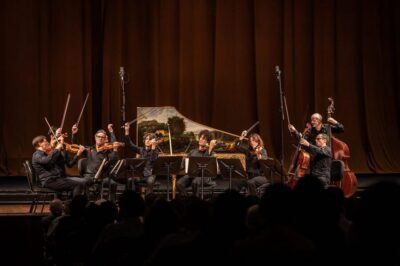
Prague turns quietly magical for 65 minutes. This Christmas concert in the Church of St. Martin in the Wall gives you well-loved classical music in a centuries-old setting, and the sound carries beautifully. The big win here is the excellent acoustic in a space that’s also tempered for winter comfort.
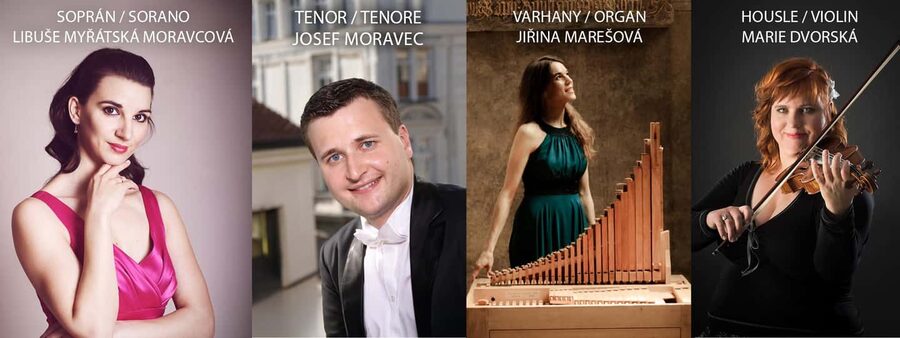
I also like the lineup: four featured soloists cover organ, violin, soprano, and tenore, so the music feels full and balanced, not like a one-instrument show. One thing to consider: there’s no cloakroom, so keep your outer layer and bag situation simple before you take your seat.
In This Review
- Key highlights you’ll care about
- Christmas Music at St. Martin in the Wall: What Makes This Different
- Finding Your Seat in Section A or B (Rows 1–6 vs 7–12)
- Inside the Church: A Romanesque-to-Gothic Setting for Sound
- The 65-Minute Flow: What Happens During the Concert
- The Soloists: The Real Engine Behind the Sound
- Vocalists
- Violin (one of these)
- Organ (one of these)
- The Music: Bach, Händel, Vivaldi, Schubert, and More
- French and Baroque openers
- Vivaldi’s winter moment
- Schubert’s angelic choral feeling
- Stradella and dramatic lyricism
- Bach’s violin showcase
- Händel and Mozart for uplift
- Italian romantic color
- The Christmas Carols Portion: Familiar, Not Cheesy
- Acoustic First: Why This Church Makes Organ and Strings Work
- Practical Tips for a Smooth Night in Old Town Prague
- Who This Concert Is Best For
- Price and Value: What You’re Really Buying
- Should You Book Christmas Concert at St. Martin in the Wall?
Key highlights you’ll care about
- St. Martin in the Wall’s acoustics make the organ and strings sound clear, not muddy
- Organ + violin anchor the program, with vocal soloists adding warmth
- A 65-minute Christmas set with famous names: Bach, Händel, Vivaldi, Schubert and more
- Old Town Prague setting: Romanesque origins (1178–1187) with later Gothic reconstruction
- Two seating zones: section A (rows 1–6) and section B (rows 7–12)
- No dress code and the venue is tempered, so you can focus on the music
Christmas Music at St. Martin in the Wall: What Makes This Different
If you want a Christmas classical concert that feels both serious and relaxed, this one hits the sweet spot. The Church of St. Martin in the Wall sits in Prague’s Old Town, and it’s not a modern performance space built for photos. It’s a real church with a real shape, built in the Romanesque style between 1178 and 1187, then later reconstructed in Gothic style. That matters, because architecture shapes how sound behaves.
And sound is the whole point here. The program is built around organ and violin plus soprano and tenore voices, so you get layers: bright string lines, steady organ depth, and then the human warmth of singing. In winter, the other practical bonus is that the venue is tempered, so you’re not fighting the cold the entire time. The reviews call out that winter comfort again and again, and I get why. It turns a concert into something you can actually enjoy from start to finish.
The whole experience is short—just 65 minutes—which is ideal if you’re doing a lot of Prague in a day. It’s also focused. This isn’t a long evening with speeches and extras. You come for the music, and then you leave to go eat something warm.
Finding Your Seat in Section A or B (Rows 1–6 vs 7–12)
This is a ticketed concert with assigned seating. You’ll choose between two areas:
- Section A: rows 1–6
- Section B: rows 7–12
If you’re picky about sightlines, go for Section A. Early rows usually mean you see the soloists more easily and you get the most direct sound. If you don’t mind a little more distance, Section B still keeps you close enough for a proper concert experience.
Your meeting point can vary depending on the option you booked, but the coordinates for the venue are 50.0831298828125, 14.419846534729004. When you’re in Prague’s Old Town, that coordinate is your safety net if you’re navigating last-minute with maps and street names. I’d still plan a little buffer time so you don’t arrive at full speed and stress.
Two other practical notes:
- There’s no dress code, so wear whatever keeps you comfortable.
- There’s no cloakroom, so don’t show up with a suitcase-and-a-coat plan. Keep essentials minimal, because you’ll want your space once you’re seated.
Inside the Church: A Romanesque-to-Gothic Setting for Sound
You’ll be sitting in a church that dates back to the 1100s. That Romanesque foundation plus Gothic reconstruction gives the space a distinct feel: sturdy, structured, and built for resonance. The upside is that churches like this naturally support musical projection. The organ isn’t just loud—it becomes part of the room.
The other important detail is that the venue is tempered. That’s not the same thing as warm indoors like a theater, but it’s enough that you can focus on listening rather than checking if your hands are still working. The result is that winter concerts in Prague stop feeling like endurance sports.
Also, the rules are straightforward, which I appreciate. You’re not allowed flash photography or video recording. That keeps the atmosphere calm and respectful. If you love taking pictures, bring your phone for the memories—but keep it dark and still during the performance.
The 65-Minute Flow: What Happens During the Concert
Plan for a single continuous concert experience with a total duration of 65 minutes. The structure is designed around soloists trading the spotlight between instruments and voices. You’ll hear:
- Organ and violin in instrumental works
- Soprano and tenore in vocal pieces
- Combined vocal and instrumental moments when the program calls for it
Because the set is relatively short, the pacing stays lively. You won’t get stuck waiting through long gaps. You also won’t leave feeling like you missed a big chunk; it’s built to land the key works and end with Christmas familiarity.
Even without a complicated itinerary, I’d suggest arriving with a simple mindset: get settled early, take a few breaths, and then let the architecture do its job. In a church with strong acoustics, the room helps you hear more than you expect.
The Soloists: The Real Engine Behind the Sound
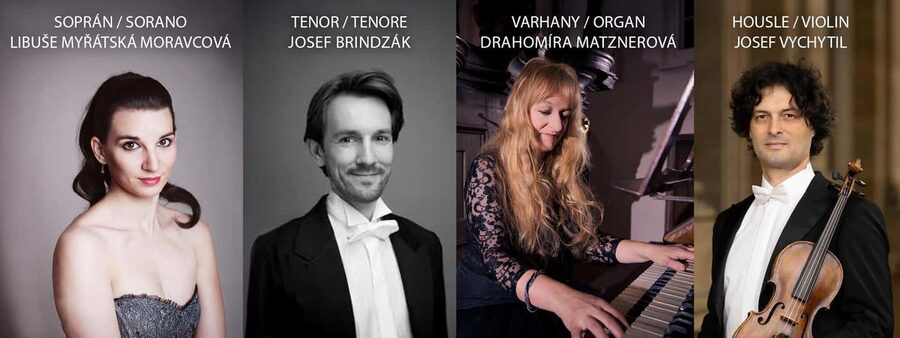
This concert stands or falls on its performers, and the lineup is strong. You’ll have vocal soloists joined by instrumental soloists:
Vocalists
- Libuse Moravcova Myratska (soprano)
- Josef Moravec (tenore)
Violin (one of these)
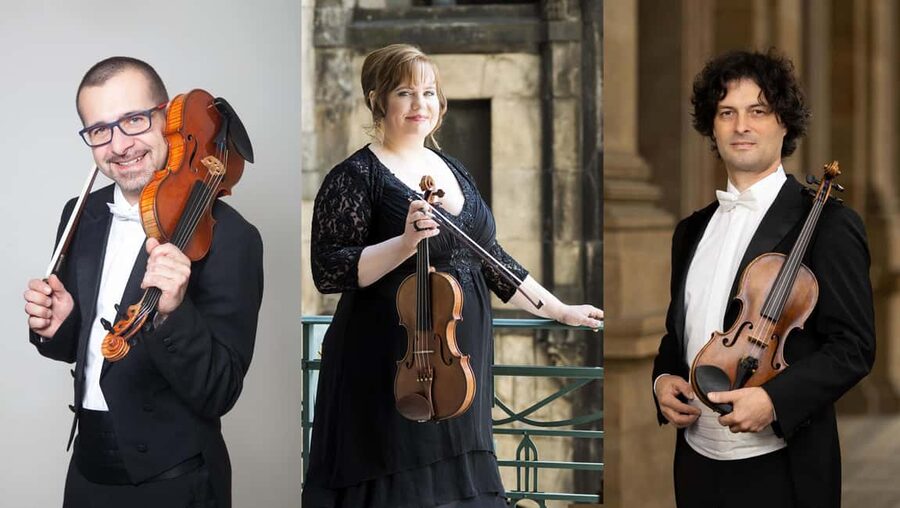
- Marie Dvorska or Filip Himmer (violin soloist)
Organ (one of these)
- Michelle Hradecka or Drahoslav Gric (organ soloist)
That means your specific night can change slightly depending on who’s performing, but the overall sound stays consistent: you always get a mix of voice, violin, and organ.
If you care about interpretation, this kind of staffing matters. Different soloists bring different phrasing and tone color. The violin can sound more lyrical or more energetic depending on the player; the organ can feel more restrained or more dramatic depending on how they shape registration. So while the composers stay the same, the details you notice will vary night to night.
The reviews repeatedly point to the quality of performance, and honestly, with a program this packed with big names, the soloists have to deliver. The good news is the format gives everyone room to shine.
The Music: Bach, Händel, Vivaldi, Schubert, and More
This is not a random playlist. It’s built from recognized classical works and then tuned toward the season at the end. Here’s what’s included.
French and Baroque openers
- Marc-Antoine Charpentier: Prelude from Te Deum
This sets an energetic, ceremonial tone right away—great for hearing how the church handles bright harmonies.
Vivaldi’s winter moment
- Antonio Vivaldi: The Four Seasons, Winter (2nd movement)
If you know only one slice of The Four Seasons, this is the one people associate with winter mood. In a good hall, you can hear the shaping of phrases as the line moves.
Schubert’s angelic choral feeling
- Franz Schubert: Mille cherubini in coro
This piece leans into the lyrical side. With soprano and tenore in the mix across the evening, it lands well as a contrast to more purely instrumental sections.
Stradella and dramatic lyricism
- Alessandro Stradella: Pieta Signore
This is where you’ll likely feel the vocal writing most clearly. You get religious/seasonal tone without it turning into plain carol singing.
Bach’s violin showcase
- J. S. Bach: Adagio for Solo Violin from Sonata No. 1
- Toccata and Fugue in D minor (Bach)
Bach in a church is the real test. The adagio part needs intimacy and control; the toccata/fugue needs clarity in fast motion. Strong acoustics help you track the structure instead of losing it.
Händel and Mozart for uplift
- G. F. Händel: Sonata in E major, Ombra mai fu from Xerxes
- W. A. Mozart: Alleluia
Ombra mai fu is famous for a reason: it’s a slow, elegant vocal line. Mozart’s Alleluia adds sparkle and keeps the mood from drifting too far into solemn.
Italian romantic color
- J. Massenet: Meditation from Thais
- Pietra Mascagni: Ave Maria
This is where the evening turns especially emotional. These melodies sit in a sweet spot between lyrical and dramatic, and the vocal/instrument pairing can make them feel even more immediate in the church.
The Christmas Carols Portion: Familiar, Not Cheesy
The final stretch includes a Medley of Czech and World Carols:
- Gloria
- Stille Nacht (Silent Night)
- Adeste fideles (O Come All Ye Faithful)
This matters because it gives you a bridge from concert hall listening to seasonal participation. Even if you’re not a hardcore classical fan, carol medleys make the ending feel like Prague in December—without turning the show into just another singalong.
One reason this lands well is the contrast. You’ve already heard structured classical forms. Then you get tunes you recognize, sung with classical restraint rather than turning into pop-song style. It’s the kind of ending that makes you leave in a good mood, not confused.
Acoustic First: Why This Church Makes Organ and Strings Work
Let’s talk about the “how” for a second. An excellent acoustic concert usually means three things:
- Notes stay clear even when instruments get loud.
- You don’t have to strain to understand vocal lines.
- The church supports resonance without swallowing detail.
Here, the combination of organ + violin + voices is perfect for testing acoustics. The organ produces thick harmonics, the violin produces fast, delicate details, and the singers sit right in the middle of the human frequency range. If the room is good, each one stays distinct.
The venue being tempered adds a second layer of comfort: you can sit still and listen. When you’re warm enough, you don’t fidget. And when you stop fidgeting, you hear more.
The reviews flag the sound and the comfort repeatedly. That’s a good sign that this isn’t just “nice church vibes.” It’s an actually listenable concert setup.
Practical Tips for a Smooth Night in Old Town Prague
Here’s how I’d play it, if you want the experience to feel easy.
- Choose Section A if you can. Rows 1–6 give you the best mix of sight and sound.
- Arrive with less baggage. No cloakroom means you’ll be responsible for your coat and bag.
- No dress code, but wear layers. You don’t need fancy clothes, but winter Prague can still be chilly outside the church. The venue is tempered inside, yet you’ll likely come in from cold streets.
- Keep your phone away during the set. No video recording and no flash photography. It’s also just better for everyone.
- Know it’s 65 minutes. That’s short enough to fit into a busy itinerary, but still long enough that you’ll want to be settled.
Language-wise, the host or greeter is Czech and English. If you need directions or last-second help, you should be able to communicate.
Who This Concert Is Best For
This is a strong match for:
- People who want Christmas atmosphere without giving up musical quality
- Fans of Bach, Händel, Vivaldi, Mozart, and the kind of classical singing that feels direct and expressive
- Anyone who wants a short cultural stop in Prague Old Town that still feels “worth dressing for,” even though there’s no dress code
It’s also a good choice if you’re traveling with mixed interests. The instrumental stars (organ and violin) satisfy the classical crowd, and the Christmas medley brings in everyone else.
It’s not suitable for children under 3 years. For families with slightly older kids, the short duration can be helpful, but the concert is still a formal listening experience.
Price and Value: What You’re Really Buying
There’s no point pretending this is just a random ticket. The value here comes from the combination of:
- A 65-minute set that fits into a day
- A lineup with soprano + tenore plus organ and violin
- Big-name composers: Bach, Händel, Vivaldi, Schubert, Mozart, and more
- A venue with excellent acoustic plus winter comfort (tempered)
Even without knowing a specific price, you can judge value by the essentials: how much music you get, the quality of performers, and whether the setting makes it sound better. This one has the right ingredients.
Should You Book Christmas Concert at St. Martin in the Wall?
I’d book it if you want a Christmas concert that feels authentic to Prague rather than generic. The church setting is historic, the sound is the focus, and the program mixes familiar classics with seasonal carols in a way that keeps the mood festive without losing musical seriousness.
Skip it only if you’re looking for something long and event-like. This is 65 minutes of focused performance. It’s also not ideal if you hate the idea of managing coats and bags with no cloakroom.
If you’re in Prague around the holidays and you want one evening that’s easy to plan and satisfying to hear, this is a very solid choice.