REVIEW · COPENHAGEN
Copenhagen: The Opera House Guided Tour
Book on GetYourGuide →Operated by Det Kongelige Teater (The Royal Danish Theatre) · Bookable on GetYourGuide
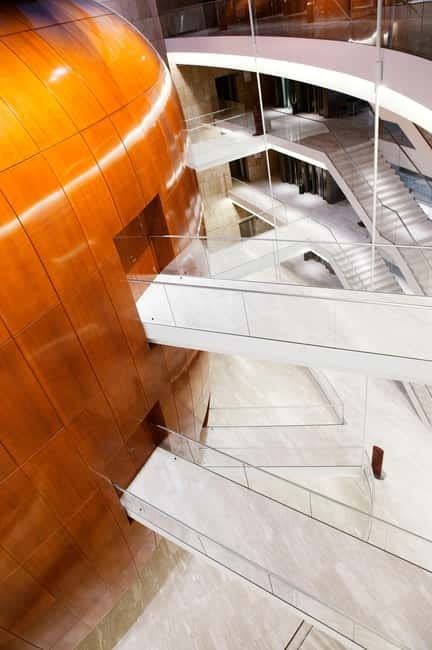
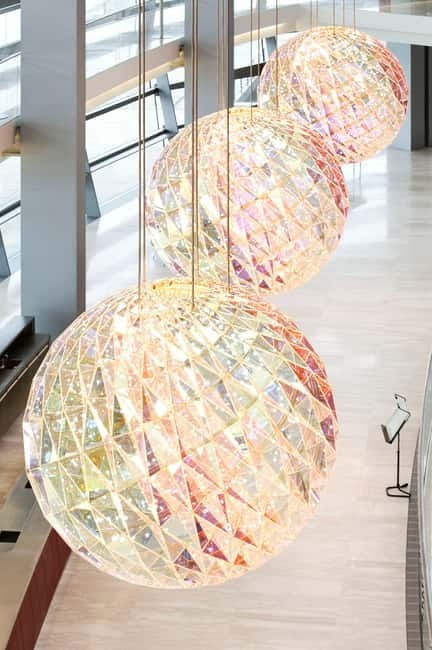
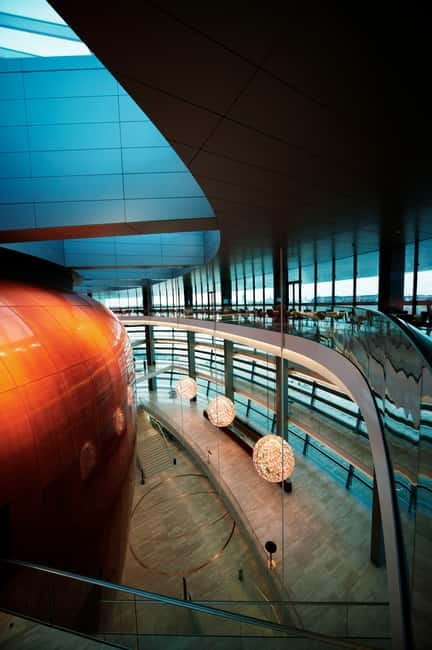
Light shows up before the music does. That’s the fun twist on this guided visit to the Royal Danish Opera House, where the first wow moment is the foyer’s overwhelming glow and artful design. I especially love seeing Olafur Eliasson’s light sculptures come to life inside the building, and I also like the glossy maple shell framing the main stage area.
The other big reason to book is the backstage look at how the opera house handles huge, complex sets and stage changes with serious high-tech planning. One consideration: this tour isn’t recommended for kids under 7, so it’s not the best fit if you’re traveling with little ones in strollers or trying to keep them entertained on a quiet, technical walkthrough.
In This Review
- Key moments on the Copenhagen Opera House tour
- Where you start: meeting the Opera House by the harbor
- The foyer lights and Olafur Eliasson’s sculptures up close
- What to expect in the foyer
- A small consideration
- Auditorium time: gilded ceiling, glowing woodwork, and the room’s purpose
- Why the auditorium stop is more valuable than it sounds
- Behind the scenes: movable stage fields and complex set changes
- What I’d watch for while you’re back there
- How scenography, costumes, and staging planning actually fit together
- A quick reality check
- Price and value: what $24 buys in 75 minutes
- Time management tip
- Who this tour suits best (and who might want a different plan)
- Should you book this Copenhagen Opera House guided tour?
- FAQ
- How long is the Copenhagen Opera House guided tour?
- Is the tour in English?
- Where do I meet the guide?
- Is the tour wheelchair accessible?
- Is this tour suitable for young children?
- Are pets or large bags allowed?
Key moments on the Copenhagen Opera House tour
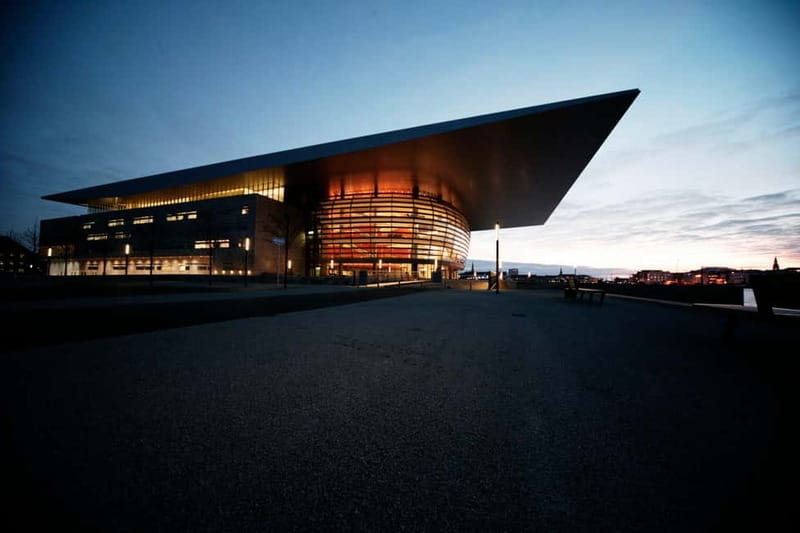
- The main foyer light experience: an intense, art-and-architecture welcome before you even reach the auditorium
- Olafur Eliasson’s light sculptures: world-famous work shown in the setting it was meant to be experienced
- Glossy maple shell around the main stage: you get a sense of how the room is designed to shape performance
- Gilded ceiling and glowing woodwork: the auditorium details read differently after the tour context
- Movable stage fields backstage: see how big scenic pieces can shift so quickly and precisely
- Scenography + costumes + staging explained: practical insight into how productions are built
Where you start: meeting the Opera House by the harbor
The tour meets in the lobby at the main entrance out to the harbor. It’s just around the corner from the official address, Ekvipagemestervej 10, so I’d suggest you use the nearby landmark feel rather than trying to hunt down the exact street number on foot. You should arrive 15 minutes early so you don’t end up sprinting with everyone else at the door.
This is a guided tour experience run by Det Kongelige Teater (The Royal Danish Theatre). That matters because the emphasis is on how the building and productions work together—not just pretty rooms. It’s also in English, which is a relief if you’re spending limited time in Copenhagen and don’t want to switch languages just for a tour.
Practical heads-up: you’ll want to travel light. Baby strollers aren’t allowed, large bags or luggage aren’t allowed, and food and drinks aren’t allowed during the visit. Pets aren’t allowed either (assistance dogs are fine).
The foyer lights and Olafur Eliasson’s sculptures up close
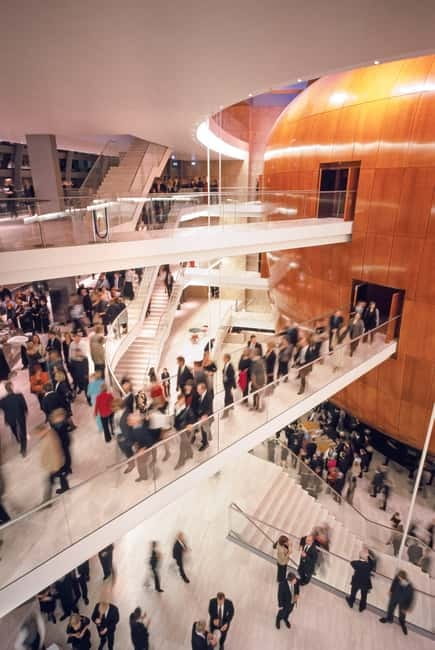
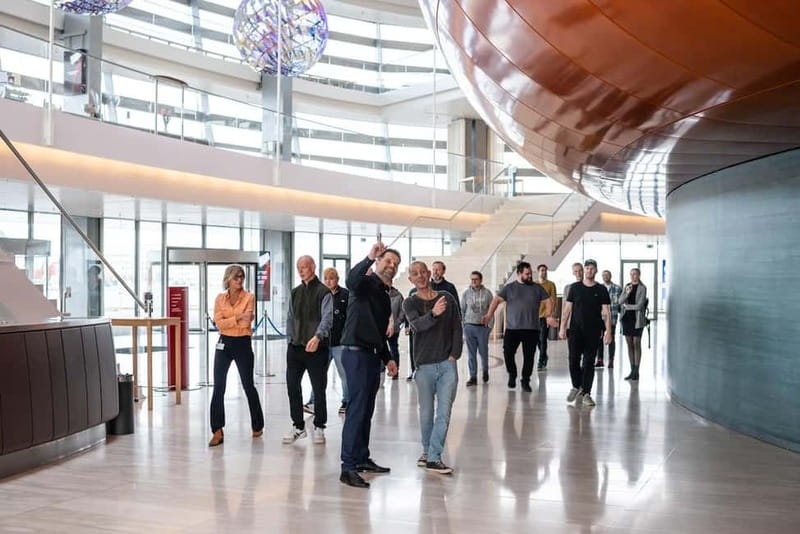
The first stop is the Opera House foyer, and it’s designed to overwhelm you in a good way. You walk in and the building’s lighting immediately changes the mood—almost like the architecture is performing along with the art.
The standout feature here is Olafur Eliasson’s world-renowned light sculptures. The tour helps you see what makes them special in this context: they aren’t just installed decorations. They’re placed so the space itself amplifies the effect, with light reflecting and bouncing off nearby surfaces.
I also like that you get pointed attention toward the glossy maple shell that wraps around the main stage area. Maple isn’t just a material choice; it shapes how the room feels, how warmth shows up in lighting, and how the stage reads from different angles. Even if you’re not an architecture person, the guide’s explanations make you notice things you’d otherwise gloss over.
What to expect in the foyer
You’ll spend enough time here to actually take it in—long enough to see how different viewpoints change the lighting feel. If you’re the kind of person who pauses for two minutes instead of ten seconds, this stop will suit you.
A small consideration
Because the foyer is part of a working opera facility, the experience can feel a bit “guided and structured,” not casual wandering. Come with the mindset that the guide is there to point you at the building’s logic, not just facts to collect.
Auditorium time: gilded ceiling, glowing woodwork, and the room’s purpose
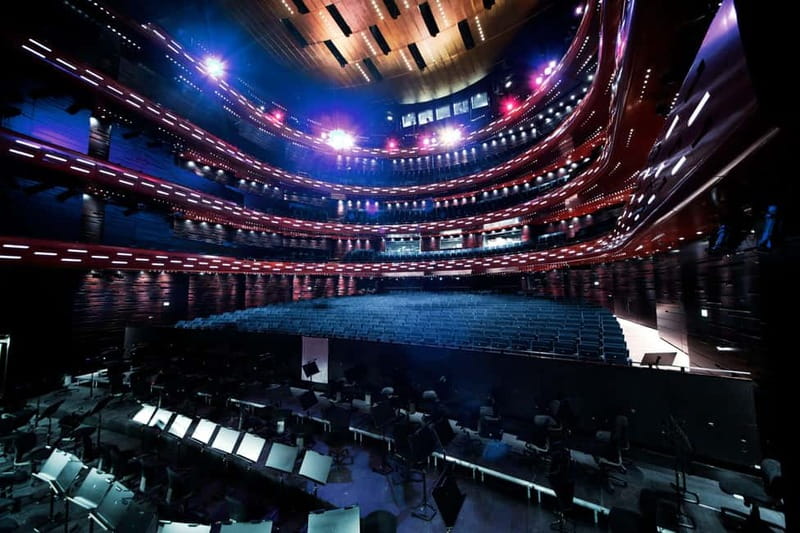
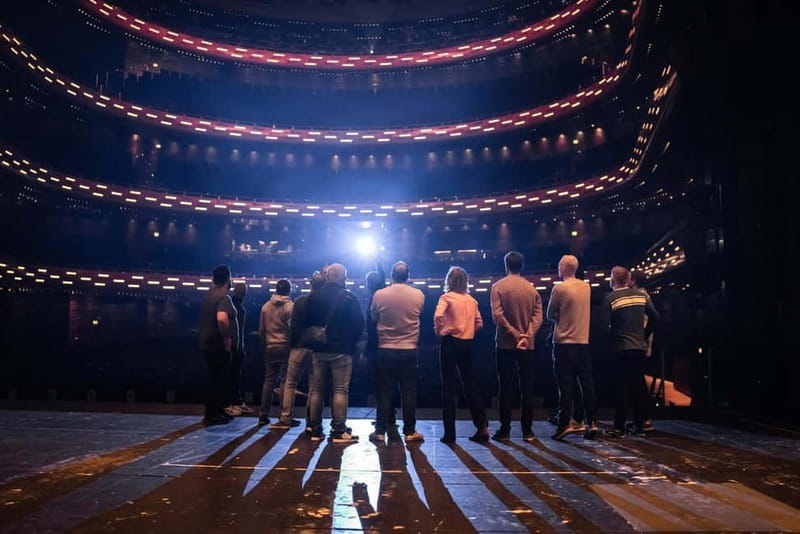
Next you head into the hall’s main atmosphere, where the details get more dramatic. The gilded ceiling and the glowing woodwork become the visual center of gravity, and the tone shifts from art-light to performance-ready elegance.
This is one of those spaces where the tour pacing helps. Early on, you’re thinking about light and materials. Later, when you’re told how the stage environment is built and controlled, you start seeing the auditorium as a system—one that supports sightlines, sound, and dramatic illusion.
The tour also connects this room to the main stage area you saw outside the auditorium zone. That link makes the design feel intentional, not decorative. If you love theater, this is the moment when the building starts to feel like it’s built for the specific trick of opera: turning imagination into something you can see clearly.
Why the auditorium stop is more valuable than it sounds
You could technically look at the Opera House from the outside and get photos. But inside, the guide’s context changes what the details mean. You’re not just looking at gold and wood—you’re learning how the setting supports staged effects that would be harder to pull off elsewhere in Denmark.
Behind the scenes: movable stage fields and complex set changes
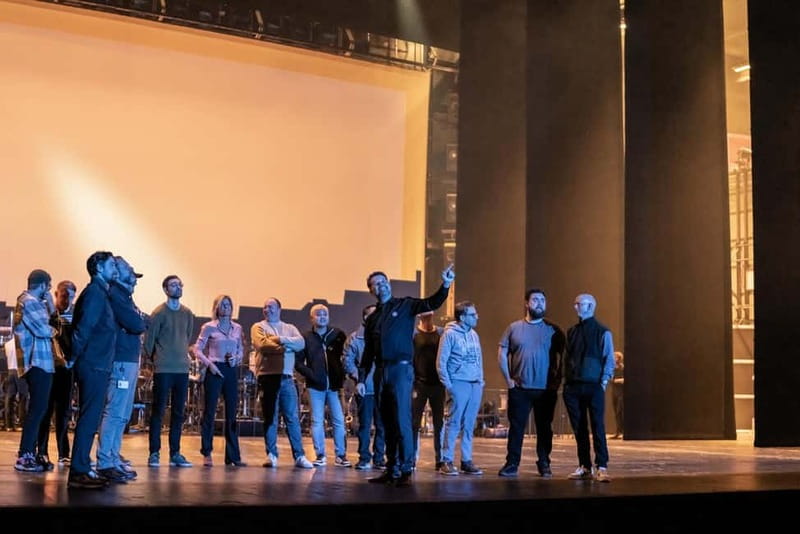
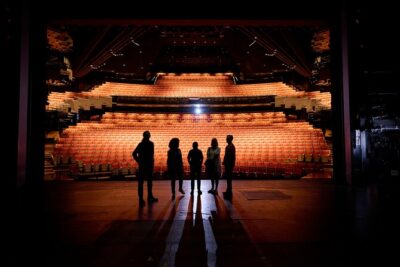
This is the heart of the experience: you go backstage and see how the opera house handles set movement. The key idea you’ll hear is that the stage includes movable stage fields, which let productions shift gigantic, complex scenography in ways that would be difficult or slow in a more traditional setup.
You’ll likely get a mix of scale and mechanics. The tour explains how high-tech solutions work alongside staging needs, so you get a clearer picture of how theatrical magic happens. Instead of thinking about a single dramatic moment, you start imagining the behind-the-scenes workflow that makes those moments possible—scene changes timed, sections repositioned, and the production staying on schedule.
This backstage component is also why the tour’s reputation is so strong. The visit connects the pretty front-of-house design to the reality of what runs underneath it.
What I’d watch for while you’re back there
Pay attention to how the systems are described in relation to performance needs. Even if you don’t remember every technical term, you’ll catch the practical logic: scenery moves because the show needs it to, and the building is built to support that requirement.
How scenography, costumes, and staging planning actually fit together
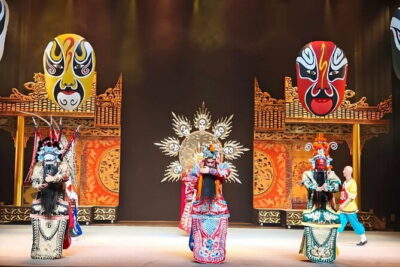
The tour doesn’t stop at machinery. You also learn how to work with staging performances, costumes, and scenography. This is where the tour becomes useful even if you don’t care about engineering.
Opera is a mash-up: visual design, movement, lighting, timing, and practical constraints all have to work together. The tour helps you understand the production side of the building you’re standing in. Instead of treating opera like a black box that appears as music and drama, you see it as a production that has to be engineered—down to how costumes and stage elements work with the scene changes.
If you’re the kind of traveler who likes cultural experiences with context, this section is the sweet spot. It turns sightseeing into understanding.
A quick reality check
This portion is more explanatory than interactive. Don’t expect hands-on activities. You’ll get the “how it works” framing, which is still valuable, but it’s not a workshop vibe.
Price and value: what $24 buys in 75 minutes
At $24 per person for about 75 minutes, you’re paying for a guided, inside-access look at both the public and working sides of the Royal Danish Opera House. That makes it feel fair for a tour that includes entry and a real backstage component, not just a quick walk through front rooms.
The tour is also in English, which can matter for value in Copenhagen if you’re comparing similar visits that require local-language sessions. And it’s wheelchair accessible, so the experience is designed to be usable for more people than some older-style attractions.
It’s worth mentioning the current quality signal: the tour sits at 4.7 with 156 reviews. The themes behind that score are consistent with what you’d want—strong guidance and a genuinely interesting backstage look.
Time management tip
Seventy-five minutes sounds short, but it’s long enough to meaningfully cover: foyer, auditorium, and backstage explanation. If you’re pairing this with other Copenhagen stops, consider putting it earlier in your day. Seeing the building’s “production logic” first makes the rest of your sightseeing easier to appreciate.
Who this tour suits best (and who might want a different plan)
This tour fits best if you like architecture, theater, or any experience where the behind-the-scenes angle adds depth. You’ll also get more out of it if you enjoy learning practical how-things-work details, because that’s the thread tying the whole visit together.
It’s also a decent choice if you want something cultural but not overly long—75 minutes is a manageable slot in a day full of museum time and Danish pastries.
The big group mismatch is simple: children under 7 aren’t recommended. If you’re traveling with younger kids, plan on a different activity that matches their attention span and stroller needs.
Should you book this Copenhagen Opera House guided tour?
Book it if you want a high-impact indoor experience that goes beyond photos—especially if you care about how theater is built. The combination of the foyer light art, the auditorium design details, and the backstage staging mechanics makes this feel like more than a standard building tour.
Skip it (or consider another option) if you’re going mainly for casual sightseeing and you dislike structured explanations, or if you’re traveling with small children who fall under the age recommendation.
If you do book, bring curiosity about both design and production. This is the rare tour where the building’s beauty and the show’s engineering feel connected—so you leave with a clearer sense of how opera becomes visible.
FAQ
How long is the Copenhagen Opera House guided tour?
The tour lasts 75 minutes.
Is the tour in English?
Yes, the guided tour is in English.
Where do I meet the guide?
You meet in the lobby at the main entrance out to the harbor, just around the corner from Ekvipagemestervej 10.
Is the tour wheelchair accessible?
Yes, the tour is wheelchair accessible.
Is this tour suitable for young children?
It’s not recommended for children under 7 years old.
Are pets or large bags allowed?
Pets are not allowed (assistance dogs are allowed), and luggage or large bags aren’t allowed. Baby strollers and food and drinks aren’t allowed either.