REVIEW · AMSTERDAM
Amsterdam: Classical Music Concert at the Begijnhof
Book on GetYourGuide →Operated by The Liberty Productions · Bookable on GetYourGuide
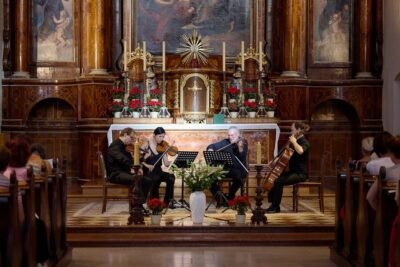
A church courtyard becomes your concert hall. In the English Reformed Church at Amsterdam’s Begijnhof, you get a one-hour mix of famous composers in an old, quiet setting, and the sound comes through in a way that feels close and clear. I love the combo of a legendary venue plus a program packed with the kind of music people actually recognize, from Vivaldi’s Four Seasons to Beethoven’s Symphony No. 5. One heads-up: because it’s just 1 hour, you’ll want your evening planned so you’re not rushing afterward.
What makes this work for real people is how classic it feels without being formal. You’ll get an entry ticket and a printed concert program, and there’s no dress code—so it’s easy to fit into a day of canals and wandering. I also like that the music choices cover both big emotions (like Mozart’s Requiem, Lacrimosa) and warm, familiar tunes (like Bach’s Air on the G String).
Before you go, do one simple thing: arrive on time and show your ticket at the entrance to the church at the Begijnhof. The church and courtyard setting is part of the charm, but it also means you’ll want to be ready when doors open.
In This Review
- Key things to know before you go
- Why the Begijnhof English Reformed Church hits different
- The 1-hour concert program: what you’ll actually hear
- The musicians: Amsterdam Gala Orchestra with soprano
- Timing, entry, and how to plan your Amsterdam night
- Price and value: is $30 worth it?
- Who should book this (and who might skip it)
- Should you book the Begijnhof classical concert at the English Reformed Church?
- FAQ
- How long is the Amsterdam Begijnhof classical concert?
- Where do I go for entry?
- What pieces are included in the concert?
- Is there a dress code?
- Are transportation, food, or drinks included?
- Is the venue wheelchair accessible?
Key things to know before you go
- Historic venue with standout acoustics: The English Reformed Church is known for bringing the music forward.
- A greatest-hits program: Vivaldi, Mozart, Bach, Handel, Schubert, and Beethoven in one hour.
- Soprano adds the vocal highlights: You’ll hear featured vocal moments in pieces like Mozart’s Requiem (Lacrimosa) and Schubert’s Ave Maria.
- Printed program helps you follow along: It’s useful if you’re new to classical concerts.
- No dress code, easy to slot in: You can keep your evening casual and focused on the music.
Why the Begijnhof English Reformed Church hits different
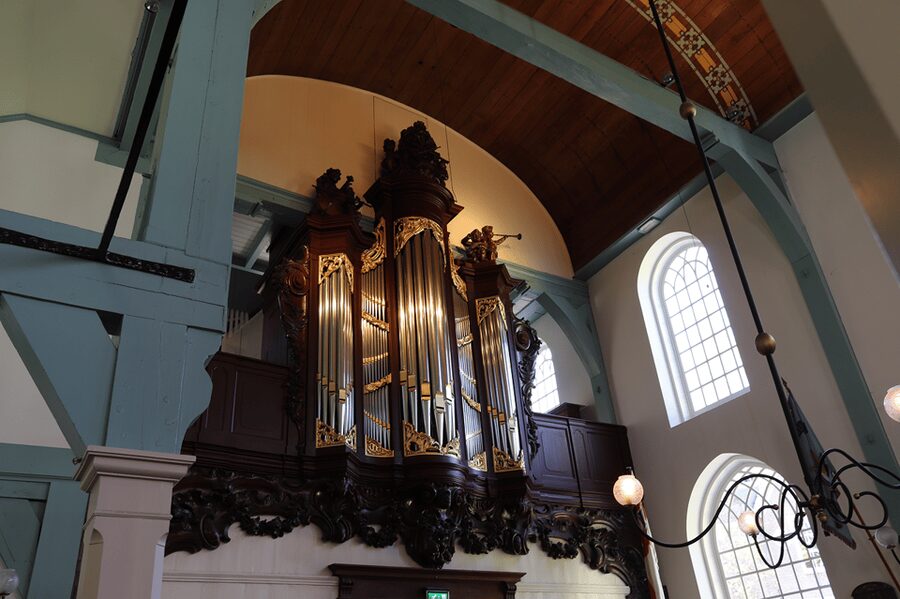
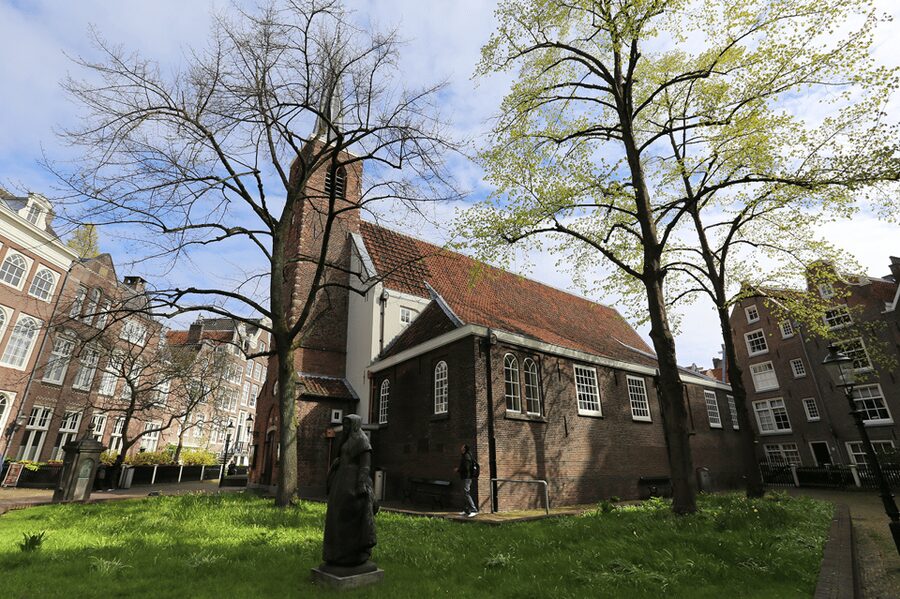
Amsterdam has no shortage of beautiful buildings, but this concert venue gives you something extra: a historic church setting that feels calm and intimate. The English Reformed Church sits at the Begijnhof, in a serene courtyard linked to Middle Ages Amsterdam. That matters because you’re not listening to classical music in a modern hall with distractions. You’re in a place that already quiets the mind before the first note.
The church is described as one of the oldest buildings in Amsterdam, and you can feel why people love it. Old stone can change how sound travels. In practice, that often means you get clearer phrasing from strings and better blend when the ensemble plays together. Many performances of famous works can sound good anywhere, but here the setting supports the details—smooth lines, controlled dynamics, and the sense that the music is happening right in front of you.
Another reason I’d put this high on your list is the “hidden in plain sight” factor. Begijnhof is not exactly on every typical photo route. So if you like the idea of slipping into a quieter pocket of the city—one where locals might linger more than crowds—you’ll likely enjoy the atmosphere as much as the performance.
You can also read our reviews of more tours and experiences in Amsterdam.
The 1-hour concert program: what you’ll actually hear
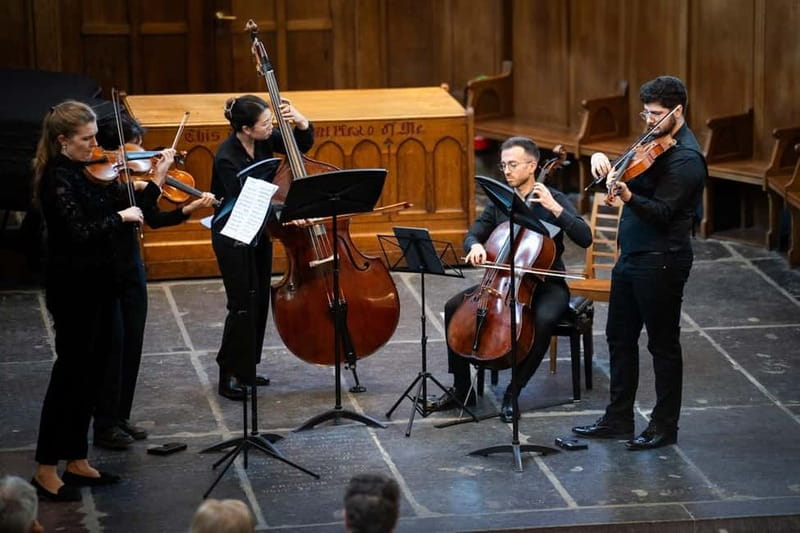
This is a short concert on purpose: one focused set, about an hour long. That’s great if you want a meaningful classical experience without turning your night into a long event. The schedule you’ll hear runs through a sequence of well-known pieces, moving between bright, sacred, and dramatic moods.
Here’s the program you can expect:
- A. Vivaldi: The Four Seasons (Spring & Summer)
Vivaldi’s opening section is usually where most first-timers start smiling. It’s lively and vivid, and the melodies feel instantly recognizable even if you’re hearing them for the first time. Spring and Summer lean toward energy and clarity—fast-moving passages, springy rhythms, and that sense of music painting a scene.
- J. Pachelbel: Canon & Gigue in D major
This one is beloved for a reason: it’s steady, flowing, and easy to follow. The canon structure creates a looping effect that feels graceful rather than repetitive, and it’s a nice tonal “breather” between larger dramatic works.
- W. A. Mozart: Requiem (Lacrimosa)
This is the emotional pivot. Lacrimosa shifts the tone into something heavier and more reflective. If you like classical music for mood, this is a standout moment. The vocal writing (for the soprano in this kind of program) can make the sadness feel real without being overly theatrical.
- J. S. Bach: Air on the G String
Bach is proof that simplicity can feel deep. This piece tends to land quietly and then linger in your head. If you’ve ever heard someone describe classical music as calming, Air on the G String is the kind of music that makes that description make sense.
- F. Schubert: Ave Maria
Ave Maria brings a gentle, lyrical devotion. It often feels like a warm candle in the middle of a longer evening. With the soprano featuring here, you get that human voice element that turns a concert hall into something more personal.
- W. A. Mozart: Salzburg Symphony K136 (Allegro)
This piece swings the mood back toward bright and forward-moving energy. An Allegro movement is usually all forward motion—clean articulation, teamwork between sections, and a sense that the orchestra is driving the rhythm with confidence.
- L. van Beethoven: Symphony No. 5 (Allegro)
Beethoven’s Fifth is one of those pieces everyone knows in fragments. In a live setting, it’s more than recognition. The music builds tension and momentum, and you get the thrill of watching it unfold with a strong sense of structure.
- G. F. Handel: Ombra mai fu from Xerxes
This is a satisfying closing choice. Handel’s writing often feels stately and graceful. Ending with a piece like Ombra mai fu can leave you with a sense of calm after the Beethoven energy—like stepping back into daylight.
Because the program spans the kind of works people associate with classical music, it’s also a smart intro concert. You’re not stuck with just one style, either. You get baroque (Vivaldi, Bach, Handel, Pachelbel), classical (Mozart, Schubert), and Beethoven’s big drama all in one hour.
The musicians: Amsterdam Gala Orchestra with soprano
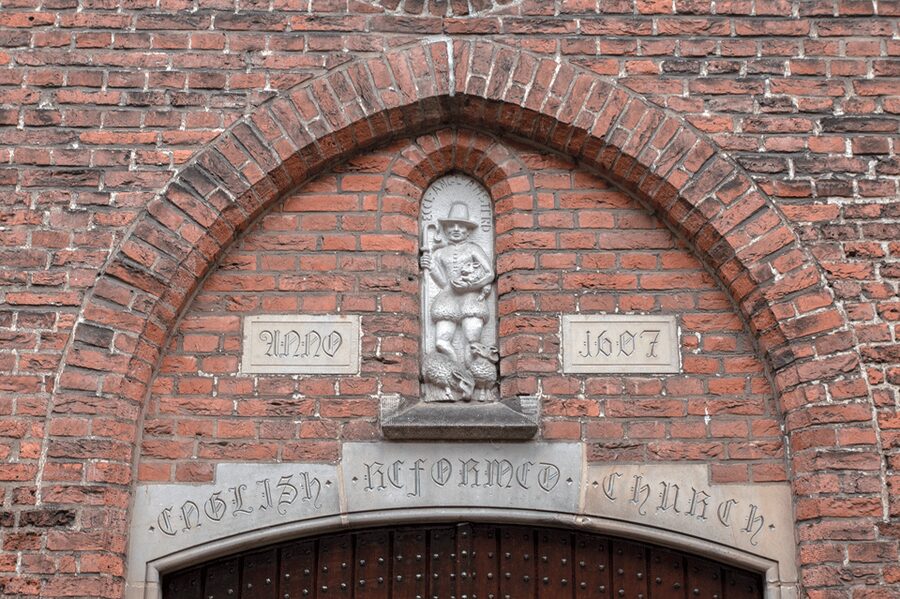
You’re not just buying a ticket for the building. The performance comes from the Amsterdam Gala Orchestra, plus a soprano. That vocal component matters because it changes how you experience the “sacred” pieces.
In this set, the most clearly vocal moments are tied to Mozart’s Requiem (Lacrimosa) and Schubert’s Ave Maria. When a soprano is involved, you typically feel more direct emotional clarity. Words and phrasing shape the sound, and the ensemble has to balance the voice with the orchestra so it doesn’t overpower the music—or get swallowed by it.
If you’re new to classical concerts, the soprano also makes the concert easier to emotionally track. You’re not only listening for instruments; you’re listening for character and expression. Even if you don’t read music, the vocal lines tend to give you an anchor.
And even for music fans, having a soprano in a mostly orchestral program is a practical benefit. It breaks up the texture, and it helps prevent the evening from feeling like one long instrumental stretch.
Timing, entry, and how to plan your Amsterdam night
This concert is about 1 hour, and you’ll see different starting times based on availability. That’s useful because you can fit it around dinner plans, a canal walk, or your museum schedule.
Here’s the on-the-ground reality you should plan for:
- You’ll enter by showing your ticket at the entrance to the English Reformed Church at the Begijnhof.
- You should arrive on time to guarantee entrance.
- Transportation is not included, and food and drinks are not included.
What that means for your plan: treat this as a focused event. If you want a smooth evening, aim to arrive a little early so you’re not standing around in transit stress.
Since food and drinks are not part of the ticket, I recommend handling dinner first. Then you can focus fully on the music. Also, because there’s no dress code, you don’t need to overthink your outfit. Wear what feels comfortable for walking to Begijnhof and sitting for an hour.
The meeting pattern is simple: it starts at the church entrance and ends back at the same meeting point. So you’re not dealing with transfers or a second drop-off. You can go right back into Amsterdam’s evening rhythm without extra steps.
Price and value: is $30 worth it?
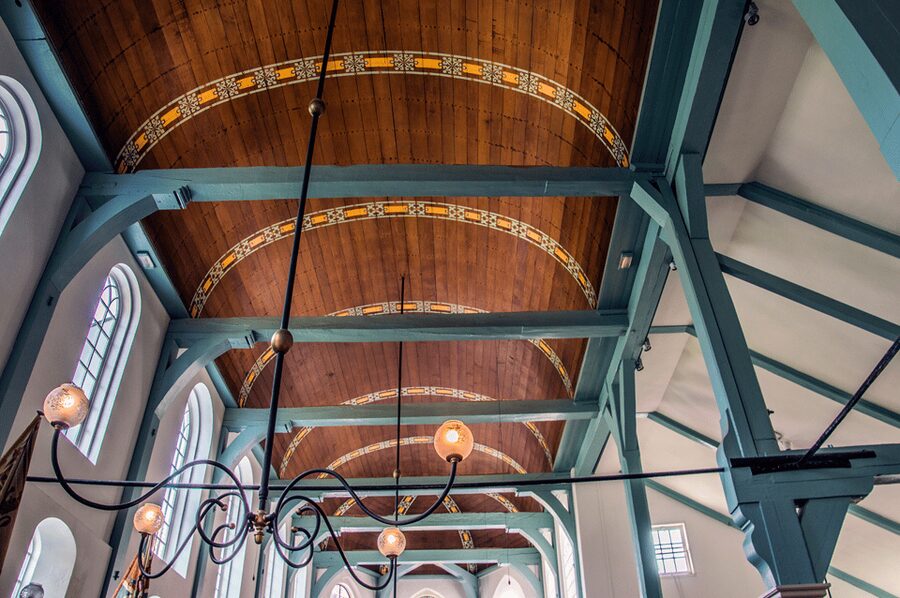
At $30 per person, you’re paying for a one-hour concert in a historic Amsterdam venue, with a full program of widely recognized classical works plus a printed program. The value here isn’t just the music. It’s the combination.
What you’re getting for the money:
- A real performance by the Amsterdam Gala Orchestra (with soprano)
- A program that includes multiple famous composers and major works
- A venue that’s part of the experience, not just a container
- A printed concert program that helps you follow along
- No dress code, which keeps the event low-pressure and easy to attend
If you’ve been on the fence about classical concerts because you think they’ll be formal, slow, or hard to enjoy, this one is priced in a way that feels approachable. It’s also a good option if you want a “taste” of classical music without committing to a half-day or more.
The main trade-off is also the main strength: it’s only an hour. If you love long concerts, this might feel short. If you want a focused evening with a clear ending time, it’s a win.
Who should book this (and who might skip it)
This concert is a strong fit if:
- You want a first classical music concert that uses music people already recognize.
- You like famous composers, but you also want the experience to be approachable.
- You enjoy listening in a historic setting, not a loud, modern venue.
- You want an easy add-on to an Amsterdam itinerary that doesn’t swallow your whole evening.
It may be less ideal if you:
- Want an all-night event or a multi-hour program.
- Prefer contemporary music only, since the lineup is classic-rooted.
- Need a restaurant-style experience with food included, because food and drinks aren’t part of the ticket.
One more practical thought: this kind of concert works well for couples, solo travelers, and parent-child pairs who can sit still for an hour and appreciate famous melodies. The venue itself helps. The quiet courtyard and the old church setting make it easier to settle in quickly.
Should you book the Begijnhof classical concert at the English Reformed Church?
I think you should book it if your goal is a memorable, low-stress classical evening in one of Amsterdam’s calmest historical pockets. The best part is the pairing of a historic church atmosphere with a program that goes straight for the music most people want to hear: Vivaldi, Mozart, Bach, and Beethoven, plus a soprano feature in the vocal pieces.
Book it if you’re a first-timer too. The printed program plus the lineup of well-known works makes the whole thing easier to enjoy. Just be sure you arrive on time at the church entrance at the Begijnhof, since entry depends on your ticket and timing.
If you want a short classical moment that still feels special, this one delivers.
FAQ
How long is the Amsterdam Begijnhof classical concert?
The concert lasts about 1 hour.
Where do I go for entry?
Show your ticket at the entrance to the English Reformed Church at the Begijnhof.
What pieces are included in the concert?
The program includes The Four Seasons (Spring & Summer) by Vivaldi, Pachelbel’s Canon & Gigue in D major, Mozart’s Requiem (Lacrimosa), Bach’s Air on the G String, Schubert’s Ave Maria, Mozart’s Salzburg Symphony K136 (Allegro), Beethoven’s Symphony No. 5 (Allegro), and Handel’s Ombra mai fu from Xerxes.
Is there a dress code?
No dress code is required.
Are transportation, food, or drinks included?
No. Transportation and food and drinks are not included.
Is the venue wheelchair accessible?
Yes, the activity is wheelchair accessible.