REVIEW · BEIJING
Beijing: Night Tour Of Peking Opera Show / Transfer
Book on GetYourGuide →Operated by Private China Trips · Bookable on GetYourGuide
Peking Opera is one strange art form. It’s also one of the most important in China, with over 230 years of development behind the singing, acrobatics, and character work. I love that this tour pairs the performance with a real English-speaking guide who can translate what you’re seeing, not just point at it. I also like the no-fuss setup: a private guide and driver meet you with a sign (your name), then take you straight to the theater on the evening schedule.
One thing to consider is value. The show window is from 19:30 to 20:40 (about 70 minutes), so if you’re expecting a long evening of extra performances, the total time can feel like more than you bargained for. And yes, there are reviews that criticize the price versus the runtime, so it’s worth checking that this is your right match for a guided, ticketed night out.
In This Review
- Key things to know before you go
- Getting picked up in Beijing at night without the stress
- Peking Opera, explained: what you’re actually watching
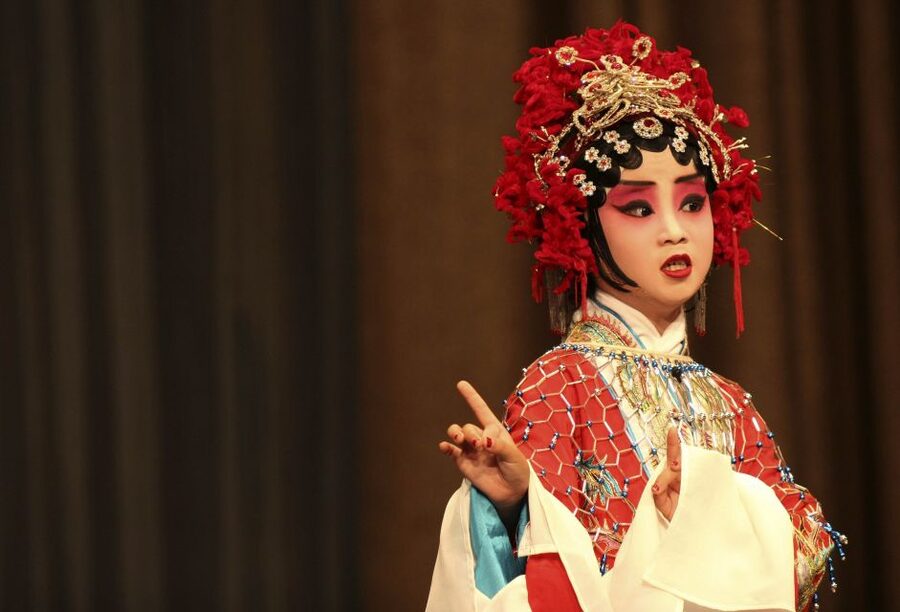
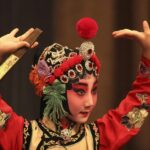
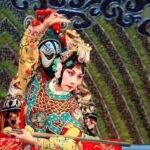
- Inside the show: costumes, movement, and character acting
- The music you’ll hear: orchestra on one side, percussion on the other
- Your evening schedule: pickup at 18:20, show 19:30–20:40
- Dinner: plan around what’s not included
- Seats, translation, and what to expect from the guide
- Price and value: is $166 per person fair for this night?
- Who this tour fits best in your Beijing plan
- Practical tips that will make your opera night smoother
- Should you book this Beijing Peking Opera night tour?
- FAQ
- What time do they pick me up from my hotel?
- When does the Peking Opera show start and end?
- How long is the tour in total?
- What’s included in the price?
- Is dinner included?
- What language is the live guide?
- Do I need to bring a passport?
- Are pets allowed?
- Is this tour suitable for pregnant women?
Key things to know before you go
- Hotel pickup with your name: the guide/driver holds a sign with your name to help you connect fast.
- A guided show in plain terms: you’ll have Chinese/English support from a live guide during the experience.
- Opera style with serious roots: Peking Opera traces key formation to 1790 and grew under imperial patronage.
- You’ll learn what the music is doing: orchestra vs percussion cues different moods and action.
- Direct theater transfer: private vehicle takes you straight there, then back to your hotel after the show.
- Passport required: you must bring it for entry.
Getting picked up in Beijing at night without the stress
This is a practical tour design for Beijing in the evening. Your guide and driver come to your hotel lobby at 18:20, holding a sign with your name written on it. That detail sounds small, but it matters in a city where hotel lobbies can feel like a maze. One review specifically noted how helpful the team was for spotting the correct location, including using photos to make the handoff easy.
From there, you go by private vehicle directly to the theater. That usually means less time arguing with traffic or figuring out which gate is for tickets. You also get language support on the ground: the live guide works in Chinese and English, so you’re not stuck guessing what the performers are doing or why the costumes look so dramatic.
The ride-and-show combo also works well if your schedule is tight. The theater start is 19:30, so you’re not wandering around late in the day trying to make it on time. The tour gets you there early enough that you can focus on the show instead of logistics. Just plan to stay alert in case your hotel is a bit away from downtown—total duration is listed as 3 to 10 hours, which usually comes down to travel time plus your evening buffer.
You can also read our reviews of more tours and experiences in Beijing.
Peking Opera, explained: what you’re actually watching
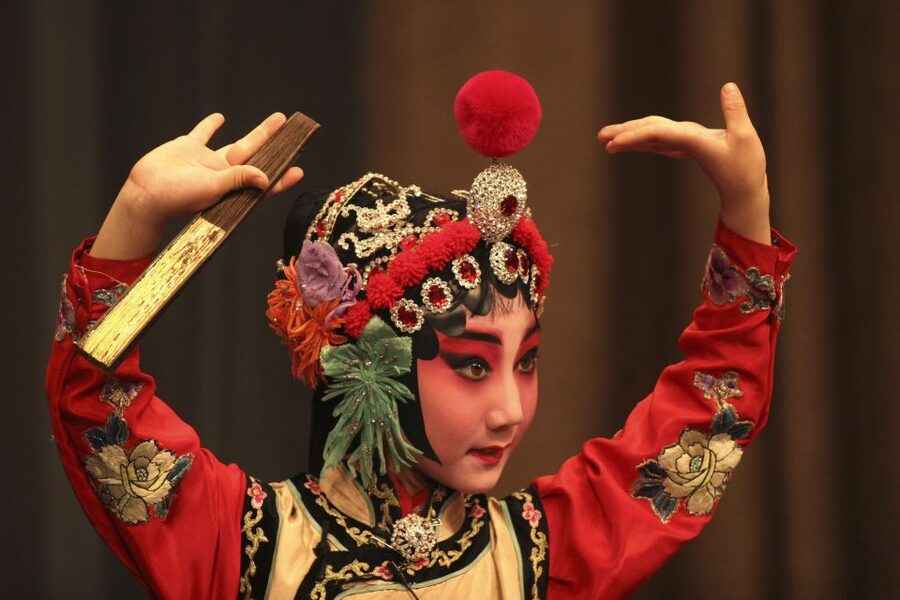
If you only know Peking Opera as something old and theatrical, this is the kind of night where you learn why it still pulls people in. Peking Opera has been evolving for more than 230 years. It’s believed the modern form gradually came into being after 1790, when four Anhui Opera troupes came to Beijing. Then it accelerated under Emperor Qianlong and Empress Dowager Cixi, who supported it and helped it spread from court culture toward broader audiences.
What makes it different from a Western-style opera is that Peking Opera is built from performance “tools” working together: singing plus dance, martial arts, and mime. You’ll see that in the way characters communicate. Sometimes the story is carried by facial expression and body language as much as by lyrics. Sometimes movement feels like it’s doing its own storytelling.
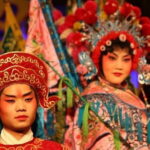
Costume detail is part of the system, too. The tour explanation notes that in earlier times costumes were intentionally loud—sharply contrasting colors designed to be visible even on stages lit by oil lamps. That helps you understand why the makeup and outfits can look so bold even to modern eyes. In short: Peking Opera is stylized on purpose, not because the performers are being theatrical for fun.
And it’s not just one element. It’s an organized blend of multiple art forms that makes the characters legible at a distance. With a guide, you can start to connect the dots instead of watching the whole thing like a blur.
Inside the show: costumes, movement, and character acting
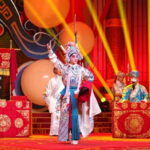
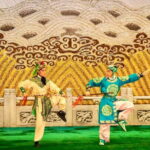
The most eye-catching part is how physical and visual the performance is. Even if you don’t follow every word of the story, you can still read what’s happening through the combination of mime, martial arts, and dance-like movement. Peking Opera characters can switch emotional states fast, using stance, gesture, and posture changes that look dramatic but actually follow strict conventions.
Costumes and facial painting do a lot of work here. The tour context you get ahead of time sets expectations: older lighting meant costumes needed contrast, and performers developed a system where color and shape help audiences identify roles quickly. That means the outfits aren’t just decoration. They function like visual shorthand for character type, rank, and temperament.
You’ll also notice the pacing. Peking Opera isn’t only about action scenes or only about music. It moves between mood shifts: calmer moments, then sudden intensity. The guide’s background explanation helps you understand that those changes aren’t random. They’re reinforced by the way the band is arranged and how the percussion cues conflict or tension.
One more practical note: this is a night show, so your comfort matters. You’ll be dealing with theater seating in the evening, and the tour includes a return ride back to your hotel afterward. That’s a big plus compared to doing the show and then figuring out a late taxi on your own.
The music you’ll hear: orchestra on one side, percussion on the other
Here’s one of the most useful things to learn before you watch: Peking Opera music is structured on purpose. The band mainly combines an orchestra and a percussion section. According to the tour briefing, the orchestra often supports peaceful scenes, while the percussion helps create the right atmosphere for battle or high-stakes moments.
Instruments you might recognize include:
- Erhu and Huqin (string instruments tied closely to Chinese opera sound)
- Yueqin (a plucked lute-style instrument)
- Sheng (reed pipe)
- Pipa (lute)
- Plus percussion instruments such as castanets, drums, bells, and cymbals
One specific detail I love: one performer can play castanets and drums at the same time and that can drive the rhythm for the whole band. That means you’re not only listening to melody—you’re listening to cues that help the performers move, react, and land transitions.
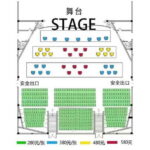
The tour information also notes where to look: the band typically sits on the left side of the stage. When you know that, you can scan the stage and realize the music is part of the choreography. When percussion ramps up, the action usually isn’t far behind. When the orchestra leads, you often get more flowing character work and calmer exchanges.
So if you’re the type who likes to understand what makes a performance tick, this is a good night for that. Even if you don’t catch every line of dialogue, you can follow the emotional grammar of the music.
Your evening schedule: pickup at 18:20, show 19:30–20:40
Time planning is one of the quiet strengths of this tour. Pickup is at 18:20, and the show starts at 19:30 and ends at 20:40. Afterward, your Chinese driver takes you back to your hotel.
That structure gives you a clean timeline:
- You’re collected in your hotel lobby at 18:20.
- You reach the theater before the curtain so you can settle in.
- You watch the performance within a defined time window.
- You’re transported back afterward, so you avoid the end-of-night scramble.
Because the total duration is listed as 3 to 10 hours, don’t assume it’s always a quick two-stop evening. Your starting location and return timing can stretch things out. But the core show is still the same: 19:30 to 20:40.
Dinner: plan around what’s not included
Dinner fee is not included. That’s the big practical point. If you tend to snack late, consider eating earlier or budgeting for something after. One guest mentioned brunch and tea during the show, but that’s not something you should count on as guaranteed. The safe approach is to eat before you go, then treat this as a show-first night.
Seats, translation, and what to expect from the guide
This tour includes a local guide and transport via a private vehicle. The guide is described as working in Chinese and English, which matters because Peking Opera can be difficult to follow if you only rely on visual cues.
Still, it’s smart to calibrate expectations. The show time is just over an hour. That’s long enough to be satisfying, but it’s not a full evening of multiple programs. If you want a longer night of additional performances, you’ll likely feel the clock.
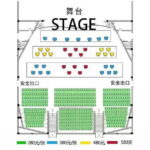
Seat location can also affect your experience. One review praised a front row seat, which suggests that in some cases you can land close. But your exact seating isn’t specified in the tour details you provided, so you should treat proximity as a possibility, not a promise. What you can count on is the guided help and the transport convenience.
Another review also criticized the cost and translation value, calling out that it felt expensive for what they viewed as a 1-hour show plus transfer. That feedback doesn’t automatically mean it’s a bad deal. It does mean you should decide whether you value:
- a ticket included package,
- private pickup/drop-off,
- and an English-speaking guide
…more than you value squeezing the lowest possible price.
Price and value: is $166 per person fair for this night?
At $166 per person, you’re paying for more than the ticket. The package bundles:
- local guide time
- driver/guide transport by private vehicle
- hotel pickup and drop-off
- and the Peking Opera show ticket cost
If you were to do this on your own, the savings would come from buying tickets directly and using taxis or ride-hailing. But you’d still need to solve the timing puzzle, manage theater entry, and keep your evening from turning into a chaotic scramble. For many first-timers, paying for a smooth path is the point.
Now, the counterpoint: the show itself is about 70 minutes (19:30–20:40). If you’re expecting a long multi-part cultural evening, the runtime can feel short. That criticism shows up in a negative review, and it’s worth taking seriously.
My practical take: this is best value if you want minimal hassle and you care about understanding what you see. If you’re only looking for the raw spectacle and you don’t need guidance, you might find cheaper ways to attend. But if this is your one night in Beijing and you want it to land well, a ticketed guided package can be money well spent.
Who this tour fits best in your Beijing plan
This is a strong match if you:
- want a guided introduction to Peking Opera rather than a confusing ticket you can’t interpret
- like structured night plans with hotel pickup
- are traveling with limited time and want an efficient evening
It’s less ideal if you:
- need wheelchair-friendly or pregnancy-friendly planning (the tour is explicitly listed as not suitable for pregnant women)
- have pets with you (pets are not allowed)
- are extremely budget sensitive and compare cost per minute of show time
If you’re the type who enjoys learning how traditional art works—how music cues scenes, how movement carries meaning—this night tour gives you that framework fast.
Practical tips that will make your opera night smoother
A few details can save you stress.
Bring your passport. It’s listed as required. Don’t leave it in a hotel safe and hope for the best.
Arrive ready for a night theater environment. The tour runs through evening hours, and you’ll be picked up at 18:20 and returned after the show ends at 20:40.
Plan for gratuities. Gratuities are recommended. That usually applies to guide and driver service, and it’s part of making sure your team feels appreciated.
Souvenir photos may be for sale. The tour notes that souvenir photos are available to purchase. If you like them, bring small cash just in case.
And one simple sanity check: double-check that you’re comfortable with a structured tour pace. You’re not wandering. You’re moving with a guide and driver, then back to your hotel.
Should you book this Beijing Peking Opera night tour?
Book it if you want a low-stress night where someone helps you understand the art form while you focus on the performance. The best parts are the hotel pickup with clear coordination, the private transport, and the way the guide explains what the show is doing—especially the music and staging cues that you can actually notice once you know what to listen for.
Skip it or shop around if your priority is maximizing show minutes per dollar. The show runs 19:30–20:40, and one critical review called the price too high for a short runtime plus transfer. If that’s how you think, this tour may feel overpriced.
If this is your one opera night and you like cultural context with the logistics handled, this is a sensible choice.
FAQ
What time do they pick me up from my hotel?
Pickup is at 18:20 from your hotel lobby.
When does the Peking Opera show start and end?
The show time is from 19:30 to 20:40.
How long is the tour in total?
The duration is listed as 3 to 10 hours, depending on timing and transfers.
What’s included in the price?
Included: local guide, driver/guide, hotel pick-up and drop-off, private vehicle transport, and the Peking opera show tickets.
Is dinner included?
No, the dinner fee is not included.
What language is the live guide?
The live tour guide provides Chinese and English.
Do I need to bring a passport?
Yes, a passport is required.
Are pets allowed?
No, pets are not allowed.
Is this tour suitable for pregnant women?
No, it is listed as not suitable for pregnant women.
If you want, tell me your hotel area (or a nearby landmark), and I’ll help you judge how the pickup/return timing might feel in real life.