REVIEW · SYDNEY
Sydney Shore Excursion: Sydney Opera House Walking Tour
Book on Viator →Operated by Sydney Opera House · Bookable on Viator
Sydney’s Opera House is famous before you even arrive. This one-hour walking tour gets you past the postcard view and into the places that make the building tick. You’ll get expert guide commentary plus a small-group pace, and you’ll even sit in the kind of chair you’ve only seen in photos. One thing to plan around: you can’t expect to see every single space, and there are about 300 stairs.
This is a great cruise-port friendly option because it’s short, timed for morning or afternoon departures, and it starts right where you want to be—at Bennelong Point. I like that the tour doesn’t just point at “shells,” it explains the real construction story, from the early controversies in 1958 to the formal opening in 1973 with Queen Elizabeth II in attendance. You’ll also get a practical heads-up on what you can photograph and where.
If stairs or inside access rules are a deal-breaker for you, this may not be your easiest match. The good news: an access alternative is available if you contact the operator directly, and the tour’s value is strong for the time you’re spending.
In This Review
- Key things to know before you go
- Why this Opera House walk feels different
- Entering the Opera House: foyers first, then the wow
- The pillar-free chamber: where design gets practical
- Access to off-limits areas (and why availability affects what you see)
- Danish architect stories and the 1958-to-1973 timeline
- Hearing the guide: headset audio that actually works
- Photo rules: where pictures are fine, and where they aren’t
- Stairs, shoes, and the “plan B” for limited mobility
- Tour & Dine: pairing the hour with Opera Bar or House Canteen
- Timing: morning vs afternoon, and why it helps cruise days
- Small group energy: the value of max 10
- Who should book this Opera House walking tour
- Should you book this Sydney Opera House Walking Tour?
Key things to know before you go

- One hour, small group (max 10): you get a calmer pace and more personal explanations.
- Inside moments most people miss: foyers, a pillar-free chamber, and off-limits areas when available.
- Headset audio helps: you can hear clearly even if you’re not near the guide.
- Photo rules are real: main public areas are workable, but performance spaces have tighter limits.
- About 300 stairs: comfortable shoes are a must.
- Tour & Dine option: you can pair it with a meal at venues inside the precinct.
Why this Opera House walk feels different
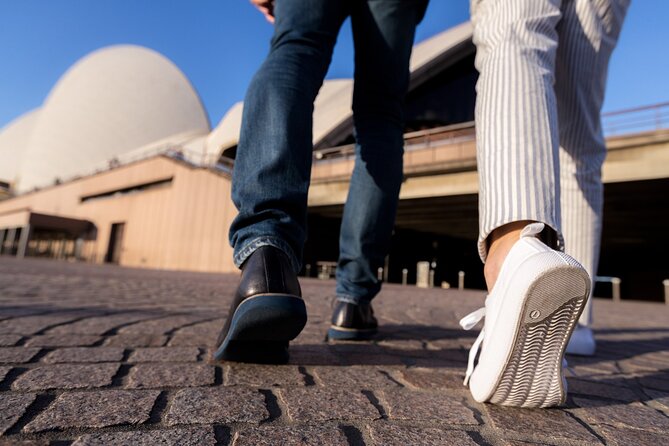
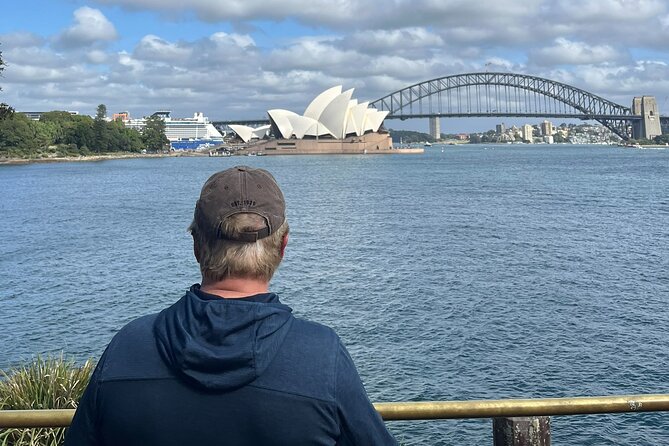
If you’ve only seen the Opera House from the harbor, you’ve seen the silhouette. This tour shows you the machine inside that silhouette. In just about an hour, you move through elegant public areas and then into selected parts of the complex that are typically not open to everyone.
The smartest part is how the guide connects details. You’re not getting a generic facts lecture. You’re getting the “why” behind the design: the Danish architect’s inspiration, the unusual building challenges, and the big construction controversies that bubbled up along the way. That context makes the place make sense fast, like you’re learning the language of the building instead of just looking at it.
And because the tour stays small, it feels less like a line and more like a guided circuit. It’s also timed so you can fit it into a day with other Sydney plans without eating your whole schedule.
You can also read our reviews of more tours and experiences in Sydney.

Entering the Opera House: foyers first, then the wow
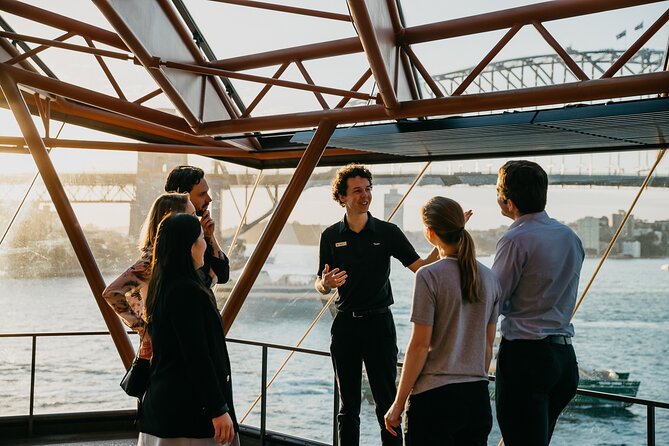
The tour starts at Sydney Opera House at Bennelong Point, and it runs in a tight loop that returns you to the meeting point. Your guide keeps it moving at a leisurely walking pace, but the inside sections still add up—plan for the stair count (roughly 300).
The first payoff is in the foyers and shared areas. You’ll see the elegant flow of spaces where people gather before performances, and you’ll get the design commentary that makes those “pretty” rooms feel intentional. Guides also explain how the interior connects back to the famous exterior shell concept made from tile-like forms.
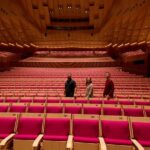
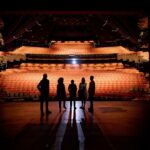
Then comes the big highlight for many people: you sit down in a custom-made white birch chair and look up at a vaulted ceiling. It’s one of those moments that turns the Opera House from a landmark into a felt experience. Even if you don’t know opera, the scale and acoustics logic start to click.
The pillar-free chamber: where design gets practical

One of the tour’s most talked-about interior stops is a pillar-free chamber—described as one of the largest of its kind in the world. That means you’re not just seeing ornate finishes. You’re seeing an engineering solution. Fewer pillars changes how spectators see, how sound behaves, and how the space feels during performances.
Your guide’s commentary matters here. You get the reasoning behind the construction choices and the kind of problems builders had to solve to make these sweeping shapes work. It also helps that the tour is structured to point you toward details you’d normally overlook—where the structure carries load, how the ceilings shape volume, and why those interiors are designed for performance life, not museum viewing.
If you love architecture, this is the moment to pay attention. Don’t rush your photos here—take a breath, look up, and let the space register.
Access to off-limits areas (and why availability affects what you see)
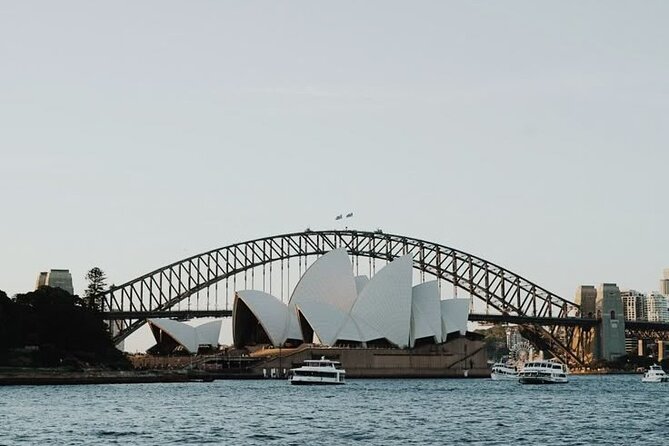
A major promise of the tour is access to parts of the complex that aren’t normally open to the public. That can include seeing one of the performance venues and exploring areas usually restricted. You might even catch a rehearsal in progress or have a shot at walking onstage, depending on what’s happening that day.
Here’s the reality check: venue access is subject to availability right up until tour departure. In other words, you should treat the itinerary as “designed to show you more than the basics,” not as a guarantee of every possible room.
This matters most if you’re the type who wants a single, specific venue like the biggest main hall. If a rehearsal or operational need changes access that day, you may see fewer performance spaces than you hoped. You still come away with strong interior context—just don’t plan your day around seeing one exact hall.
Danish architect stories and the 1958-to-1973 timeline

The Opera House feels timeless, but the building story wasn’t smooth. Your guide connects two eras: the early work starting in 1958 and the formal opening in 1973 with Queen Elizabeth II in attendance. You’ll also hear about the controversies that erupted during the construction process.
What I like about this storytelling approach is that it makes the famous exterior shells less mysterious. The shells aren’t just an artistic flourish. They’re the visible end result of engineering choices that had to be solved step by step, often under pressure. Once you understand the “problem-solving” behind the look, the building feels earned.
You’ll also hear about the exterior design made from shell tiles, and the way the Danish architect’s inspiration collided with real-world constraints. It’s a reminder that big landmarks are usually built by teams wrestling chaos into something workable.



Hearing the guide: headset audio that actually works
One practical upgrade you’ll appreciate on this tour is the way you listen. Everyone gets a headset/receiver system, so you can hear the guide clearly even if you’re a few steps away.
That’s a big deal in places where people naturally drift or take pictures. It keeps the tour from turning into “sorry, can you repeat that?” time. If you’re hard of hearing or you simply don’t like straining to catch every word, this setup is one of the reasons the tour earns high marks.
Photo rules: where pictures are fine, and where they aren’t
You’ll find plenty of photo opportunities, including vantage points that are normally off-limits for casual wandering. That said, inside rules are real. Expect restrictions around performance halls and any areas where filming would interfere with ongoing operations.
A good way to approach it: take photos in the public foyers and common areas, and save your focus for the architecture moments your guide points out. If you want photos inside, follow what your guide emphasizes on the day. The staff-run boundaries are there for a reason, and it’s better to comply than lose access mid-tour.
Stairs, shoes, and the “plan B” for limited mobility
This tour involves stairs—about 300. The walking is described as low impact, but “low impact” doesn’t remove the fact that you’ll be climbing and descending. Wear comfortable walking shoes and give your legs the respect they deserve.
If stairs are a problem for you, don’t force it. The operator notes that an access tour is available if you contact them directly. That’s the best way to avoid a stressful half-hour and keep the tour enjoyable.
Even if you’re fine with stairs, bring a steady pace mindset. The hour moves quickly, and you don’t want to arrive winded at the chair-and-ceiling moment.
Tour & Dine: pairing the hour with Opera Bar or House Canteen
If you want to turn this into a true “spend part of the day here” plan, there’s a Tour & Dine option. You can redeem a main meal plus beverage at Opera Bar or House Canteen sometime between 11:30am and 6:00pm on your tour day.
There are also specific redemption windows for Midden by Mark Olive (listed as 11:30–2:30 or 5:00–6:00). This is handy if you want a late-ish lunch after your tour rather than rushing straight into dining.
One more practical note: these are affiliated venues inside the Opera House precinct. If you’re a serious foodie chasing an adventurous off-menu meal, you may find the dining more “easy and convenient” than “destination-level dining.” If you want a simple, location-perfect meal that keeps you close to the action, it works well.
Timing: morning vs afternoon, and why it helps cruise days
You can choose morning or afternoon tour times, which matters in Sydney because the harbor area can get busy and weather can shift. For cruise days, the short duration is a lifesaver—you can build the rest of your schedule around an hour of guided interior access.
Try to book the time that fits your energy. If you’re sightseeing all morning, the afternoon may feel easier. If you like starting early and beating crowds, the morning tour is a strong call.
Small group energy: the value of max 10
This tour caps at 10 travelers. That small size changes the feel. Guides can slow down for questions. You’re less likely to get boxed into a corner with no view. And because the group isn’t huge, the tour can focus on moving you through the Opera House spaces that actually make the stories land.
It also means the guide can manage the headset audio and keep the group aligned with what’s allowed that day. That alignment matters when you’re doing a building tour with changing access rules.
Who should book this Opera House walking tour
This is a smart pick if you:
- want the interior story without buying opera tickets
- like architecture and want the construction context (1958, 1973, Danish design)
- prefer a short tour you can do on a tight schedule
- appreciate clear audio via headsets
You may want to skip or choose an access alternative if:
- you can’t manage stairs (about 300)
- you’re expecting to see every performance space regardless of what’s happening that day
- you strongly need flexible pacing due to mobility limits
If you’re visiting Sydney for the first time, this tour is a fast way to understand why the Opera House is so culturally important. It also helps you decide whether you want to return later for a show.
Should you book this Sydney Opera House Walking Tour?
I think it’s a yes for most people who want value. The price is reasonable for a one-hour guided interior experience that includes admission and gives you small-group access to parts of the complex you can’t get by wandering on your own. The headset system makes the guide’s storytelling easy to follow, and the chair-and-vaulted-ceiling moment is the kind of memorable interior experience that makes the landmark feel real.
Book it if you can handle stairs and you’re okay with access depending on daily operations. If you’re arriving with tight timing, plan to arrive early so you can check in on time and not lose your spot. And if mobility is an issue, contact the operator about the access option before you lock anything in.
If your goal is to get meaning from the Opera House, not just photos from the outside, this is the efficient way to do it.