REVIEW · DRESDEN
City tour (including visit to the Frauenkirche) and Semper Opera Tour
Book on Viator →Operated by Stadtführung Dresden und mehr von Erlebnistouren Dresden Renger · Bookable on Viator
Dresden is more than pretty buildings. This 4-hour combo tour pairs a practical old town walk with an inside visit to the Frauenkirche and then switches gears to the Semperoper, where you learn how the building and the music world connect. I like the way the tour is explained live and with story-driven details that make the places feel understandable fast, and I like that the Frauenkirche portion includes an inside inspection as part of the open church, not just a quick exterior stop. One thing to consider: the Semperoper program depends on rehearsals and scheduling, and if you prefer a more intimate, quiet experience, group size and the museum-style pacing of the opera segment may not be for you.
A good tour should help you place Dresden in your head. Here, you get a walking route that hits the main anchors of the restored city—Neumarkt, Frauenkirche, the Zwinger area, Brühl’s Terrace—then ends at the Semperoper, so your brain can connect the dots between reconstruction, power, art, and performance. If your schedule is tight, this one works because it has a clear start at 10:30 and a built-in lunch break between the two parts.
Key points to know before you go
- Inside access at Frauenkirche as part of the open church, with focused explanations on interior design and reconstruction
- Story-first city guiding using a comfortable system so you can follow along while walking and stop for photos
- Meissen porcelain Procession of Princes at the right moment, so the tiles make sense in context
- Semperoper architecture and music history explained in the foyers, glazed vestibules, and auditorium
- Timed pacing with a real lunch gap, then a 45-minute opera-house tour that ends at Theaterplatz
In This Review
- Price and what $32.02 buys you in Dresden
- Meeting at Neumarkt and getting your bearings fast
- Stallhof: the oldest fairground, and why it matters
- Neumarkt: the rebuilt historic center you can actually read
- Frauenkirche inside: reconstruction details that actually stick
- Procession of Princes: 25,000 Meissen tiles, in context
- The Dresden Zwinger: the city’s grand fairground mode
- Brühl’s Terrace: fortress wall turned promenade with river views
- Semperoper tour: foyers, glazed vestibules, and auditorium splendor
- Timing and lunch between the two parts
- Group size and pacing: when it works best, when it doesn’t
- Should you book this Dresden combo?
- FAQ
- FAQ
- How long is the tour?
- What time does it start in Dresden?
- What days does it run?
- Where do we meet for the city tour?
- Does the tour include an inside visit to the Frauenkirche?
- How long is the Semperoper tour?
- What is the lunch break like between the two parts?
- Are tickets and admissions included?
- Is there a child discount or free entry?
- How large are the groups?
Price and what $32.02 buys you in Dresden
At about $32.02 per person for roughly 4 hours, this is priced like a small guided combo rather than a single attraction. You’re paying for two guided portions with admissions covered: the old town segment includes the Frauenkirche visit and the Semperoper tour includes the opera-house portion. That matters because Dresden’s standout sites are spread out enough that a self-guided day can become “logistics first, learning later.”
The schedule is also clear. The city tour runs about 10:30 a.m. to roughly 12:30, then you get an hour for lunch, and the Semperoper tour starts at 13:30. The overall window is listed as about 2:45 p.m. (with the break included). The group is capped at 15, which is nice for questions and for not feeling like you’re swallowed by a crowd.
One more value detail: the stops along the old town walk are built around major Dresden landmarks—Stallhof, Neumarkt, Frauenkirche, the Procession of Princes, the Zwinger area, and Brühl’s Terrace—so you’re not paying to “pass by” things. Each stop is placed so you can connect one story to the next.
Meeting at Neumarkt and getting your bearings fast
You start at Dresden Information near Neumarkt 2 (01067 Dresden). This is a smart choice because Neumarkt is a hub and a visual reset after travel days—easy to find, easy to orient yourself. It also sets you up for the route that follows: you walk through the rebuilt heart of the city and then move toward the older, more ceremonial landmarks.
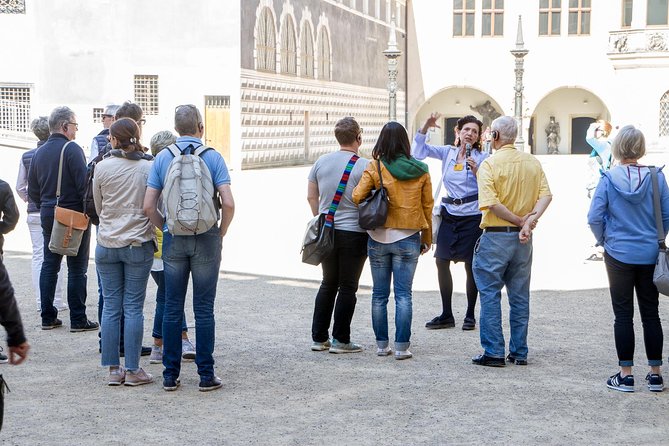
You’ll be guided through the route rather than dumped at each landmark. The tour description highlights a comfortable guidance system for the city portion, and in practice that usually means the pace is designed for listening while still allowing time to look up, take photos, and not feel like you’re sprinting between stops. It’s the kind of format that works well when Dresden’s details matter—like what you’re seeing, why it’s there, and what it symbolizes.
If you’re traveling with a service animal, you’re allowed to bring one. And since the meeting point is near public transportation, it’s simple to slot this into a broader Dresden plan.
You can also read our reviews of more tours and experiences in Dresden.


Stallhof: the oldest fairground, and why it matters
The walk begins at Stallhof, described as the oldest fairground of Dresden, plus the tournament court for knight games. That’s a mouthful, but it’s a useful opening image: Dresden didn’t always read as the reconstructed cultural capital you see today. It was also a stage for spectacle—rules, ceremonies, and public display.
You get about 10 minutes here, which is short, but the goal is less “museum time” and more “start the story.” Think of Stallhof as your warm-up. It sets the tone for how Dresden has long used architecture and public space to project identity.
One caution: at a stop like this, if you’re expecting lots of time to walk around freely, you may feel the 10-minute limit. The value is in the context the guide adds while you’re there.
Neumarkt: the rebuilt historic center you can actually read
Next comes Neumarkt, the rebuilt historic center with patrician palaces. This is where Dresden becomes legible fast. If you’ve ever seen photos of Dresden and thought, I know what I’m looking at, but I don’t know how it all fits—this stop helps you solve that.
You get another 10 minutes. Again, it’s not long, but it’s enough time to get oriented to the city’s layout and to understand why the center was rebuilt the way it was. Neumarkt is also a natural photo area, and it’s a good moment to shoot a few wider frames before the tour moves into more specific monuments.
Frauenkirche inside: reconstruction details that actually stick
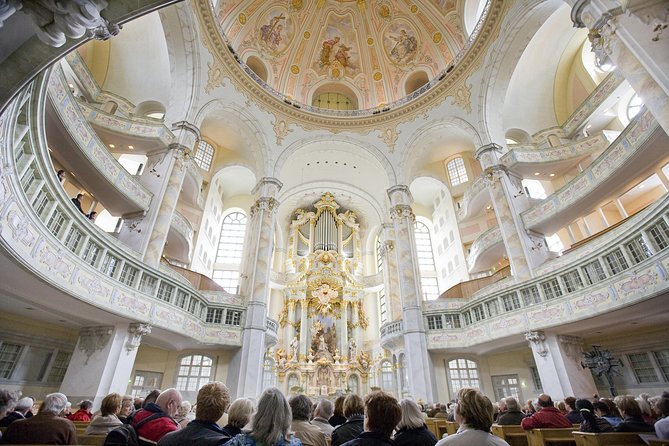
The Frauenkirche is the emotional and educational anchor of the city portion. You’ll hear exterior explanations, then you get an inside inspection as part of the open church. That inside time is key because it changes the way you understand the building. From outside, it can look like a landmark. Inside, it starts acting like a story you can walk through.
The tour focuses on interior design and historical reconstruction. That usually means you’re not just admiring surfaces—you’re learning how the rebuilding effort carries meaning, and how the interior layout and design choices help you understand what was lost and what returned.
One reason I’d prioritize this part: Dresden’s reconstruction isn’t a vague concept. It’s visible. The inside visit turns that from a headline into details you can remember later when you’re walking the city.
From the experience notes and the strong ratings, this is the segment where the guiding style tends to land best. Several people highlight how their guide, Dagmar Renger, tells Dresden with real enthusiasm and how they learned new information about the Frauenkirche that doesn’t feel like recycled facts. If you’re the type who enjoys explanations that make you look twice at what you thought you already knew, this is where your attention should go.
Procession of Princes: 25,000 Meissen tiles, in context
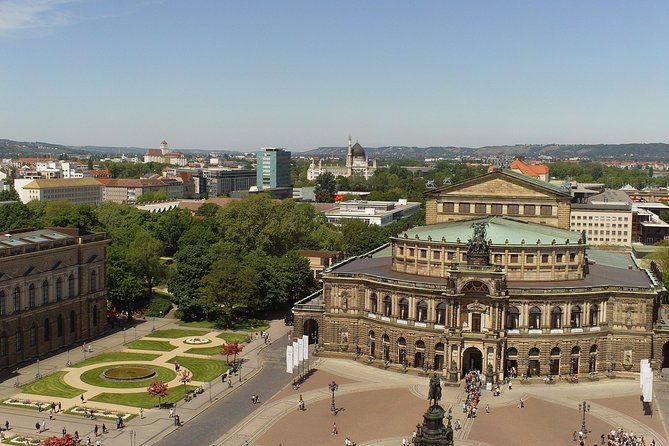
After the Frauenkirche, you move to the Procession of Princes—an image of the Saxon princely family made on 25,000 Meissen porcelain tiles. This is one of those sights that can be dazzling from a distance, but it becomes much more satisfying when you know what it represents.
You have about 10 minutes here. Use those minutes to slow down. The tiles are detailed, and you’ll get more out of the visit if you look for recurring patterns and the way the figures are presented. The guide’s job here is to connect the artwork to the people and power it represents—so you see it as a political and cultural statement, not just decorative porcelain.
Also: it’s an easy place to take photos because it’s visually structured. If you want pictures, this is a good stop to be ready with your camera rather than saving your attention for the next big site.
The Dresden Zwinger: the city’s grand fairground mode
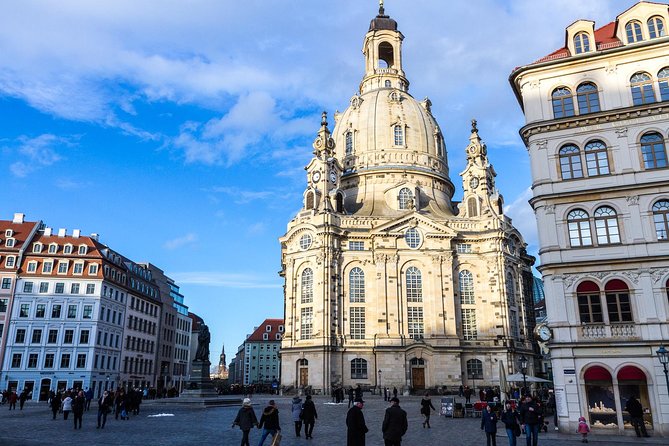
The tour then heads to the Dresden Zwinger, described as the most famous fairground of Dresden. That wording is helpful. The Zwinger isn’t just “pretty courtyard.” It’s palace-culture on display—space designed for public spectacle, court life, and shows.
You get about 15 minutes. That’s a reasonable amount of time for learning without feeling trapped in a single spot. The payoff is usually in understanding how the Zwinger fits into the broader Dresden theme: craft, power, and a love of display, all tied to the way the city was built and rebuilt.
If you like architecture, you’ll probably find this stop satisfying because it’s the kind of place where details reward close looking. If you want more time to wander on your own, treat this as the guided introduction, then plan a return later.
Brühl’s Terrace: fortress wall turned promenade with river views
Next is Brühl’s Terrasse, once a fortress wall and now a promenade with impressive views over the flood plains, the Elbe, and the new town. This is where the tour gives your feet a break from monument-to-monument intensity.
You get about 10 minutes here. Use it for the view, but also for context. A former fortress wall turning into a promenade is a strong reminder of how Dresden has changed over time—how defensive space became social space.
If you’re traveling later in the day, this stop can feel different depending on light. Still, even in a short window, you should get a sense of scale: the river, the surrounding areas, and how the city spreads out beyond the historic core.
Semperoper tour: foyers, glazed vestibules, and auditorium splendor
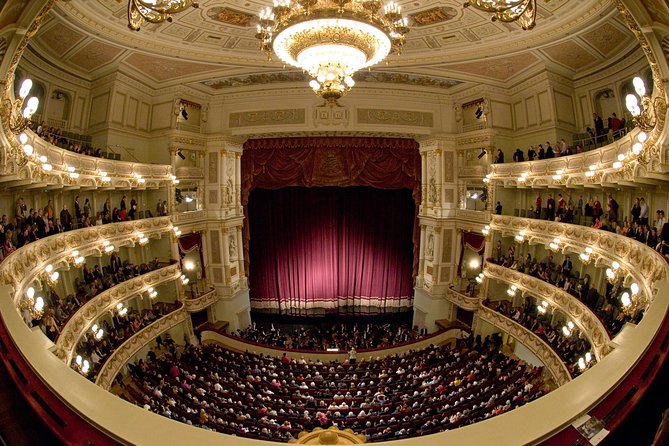
The second part is a Semper Opera House (Semperoper) tour, lasting about 45 minutes with admission included. This isn’t a quick “look inside” photo stop. The focus is on the unusual history of the building and music, plus time spent in atmospheric spaces like the foyers and glazed vestibules.
The tour highlights:
- insights into the building’s unusual construction history
- the look and feel of the foyers and glazed vestibules
- and increased splendor as you reach the auditorium
That last part matters. A building like the Semperoper is designed to create a specific emotional arc. Even without a performance running, the auditorium tour can help you understand why opera audiences treat the space almost like a ritual.
One important practical note: the program depends on rehearsal and schedule. In a few individual cases the date of the Semper Opera tour can differ, and you’ll get info from the organizer. The key for you is simple: don’t assume the exact daily flow will match another day’s version. The overall content is consistent, but the detailed timing and what you see can shift.
Timing and lunch between the two parts
This tour works because it splits the day into two logical blocks. The city walk runs about 10:30 to 12:30. Then you have about an hour break for lunch until 13:30, before the Semperoper tour begins.
That hour is valuable. You’re not paying for dead time; you’re getting breathing room to eat without rushing. It also reduces the chance that you’ll feel “tour fatigue” before the opera portion. Dresden can be a walking city, and this schedule respects that.
If you want an easy lunch plan, pick something close to where you’ll naturally pass again near Theaterplatz after the city tour ends. That way you’re not spending the break playing transport roulette.
Group size and pacing: when it works best, when it doesn’t
The tour caps at a maximum of 15 people. In theory, that’s the sweet spot: small enough to feel guided, big enough to keep the group moving. And the overall rating is very high, with most people recommending it.
Still, balance matters. One possible drawback that can happen with any guided program is mismatch in the style or pacing. A couple of people felt the second half at the Semperoper was less engaging and that the group felt too large for their preference. Others loved both halves and found the explanations compelling and motivating.
So here’s the practical takeaway for you: if you’re the type who enjoys storytelling plus architectural and music context, you’ll likely love the way this tour ties it together. If you prefer very quiet viewing time, or you dislike structured lecturing even in historic spaces, you might find the auditorium segment less your speed.
Should you book this Dresden combo?
I think this is a strong pick if you want two of Dresden’s biggest names handled properly: the Frauenkirche (inside visit) and the Semperoper (guided tour of key interior spaces). It also earns points for structure: a city route that helps you connect Neumarkt, restoration themes, porcelain artistry, and river views into one coherent mental map.
You should consider other options if:
- you hate group formats and want maximum quiet time
- you’re mainly shopping for free-strolling sightseeing and not a guided narrative
- you’re extremely sensitive to pacing differences between tour halves
But if your goal is value—learning fast, seeing the right places without wasting your day on guesswork—this one makes life easier.
FAQ
FAQ
How long is the tour?
The experience is about 4 hours total (approx.).
What time does it start in Dresden?
The start time is 10:30 a.m.
What days does it run?
From February to December, it runs on Monday, Wednesday, Friday, and Saturday.
Where do we meet for the city tour?
Meet at Dresden Information, Neumarkt 2, 01067 Dresden, Germany.
Does the tour include an inside visit to the Frauenkirche?
Yes. The city tour includes interior inspection of the Frauenkirche as part of the open church, with exterior explanations as well.
How long is the Semperoper tour?
The Semperoper (Semper Opera House) tour lasts about 45 minutes.
What is the lunch break like between the two parts?
After the city tour (about 10:30 to 12:30), you have about an hour for individual lunch until 13:30.
Are tickets and admissions included?
The price includes admission, including the Frauenkirche and the Semperoper tour. The other listed stops show ticket-free entries.
Is there a child discount or free entry?
Up to 16 years, admission is free.
How large are the groups?
There is a maximum of 15 travelers.