REVIEW · KYOTO
Kyoto: Traditional Japanese Instrument Concert
Book on GetYourGuide →Operated by Gen · Bookable on GetYourGuide
A small house can change how you hear Kyoto. This koto and shamisen concert puts you close to the music, with professional players and an explanation that actually helps you follow what you’re listening to. I especially loved the warm, family-at-home atmosphere and the way Gen and the performers keep the experience friendly, not museum-stiff. One thing to keep in mind: the venue can be a bit tricky to reach, so give yourself extra time and double-check your route.
You’ll start with a quick guide to the instruments and the Japanese sheet music, then settle in for a live set that mixes classical, contemporary, and original pieces. Afterward, there’s Q&A plus time for photos, and on some nights you may even get a chance to interact more than just ask questions. The music is the main event, but you’ll leave with a better sense of what you heard and why it matters.
In This Review
- Key points before you go
- A Kyoto Living-Room Concert for Koto and Shamisen
- Inside the Small Japanese House: What the Evening Feels Like
- The Pre-Performance Intro: Koto, Shamisen, and Japanese Sheet Music
- The Live Set: Classical, Contemporary, and Original Pieces
- Q&A and Photos: Turning a Concert Into a Conversation
- Getting There: Use Kyoto’s Rail and Bus Hub as Your Guide
- Price and Value: Is $38 a Fair Trade in Kyoto?
- Who This Concert Suits Best (and Who Might Want Options)
- Practical Details You’ll Actually Care About
- Should You Book This Kyoto Traditional Instrument Concert?
- FAQ
- How long is the Kyoto Traditional Japanese Instrument Concert?
- Where is the concert held?
- What instruments do you hear?
- Do I need prior knowledge of Japanese traditional music?
- Is there an explanation of the instruments before the music?
- Do I get a chance to ask questions?
- Are photos included?
- Is food included with the concert ticket?
- What languages are supported?
- Is it suitable for families?
Key points before you go
- A cozy Kyoto home instead of a temple or showroom: it feels like you’ve been invited into a real living space.
- Clear instrument intro first: you learn what koto and shamisen are doing before the performance starts.
- Music variety with seasonal changes: the program can shift by season and performer.
- Up-close conversation after the set: Q&A and photos help you connect with the players.
- Professional playing in a small room: the intimate size makes the sound feel personal.
- English/Japanese hosting: the guide will meet you where you are, even if this is your first traditional-instruments night.
A Kyoto Living-Room Concert for Koto and Shamisen
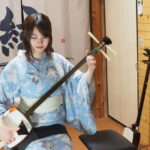
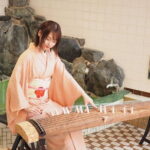
Kyoto has plenty of grand cultural stops, but this experience works on a different scale. You’re not watching from far away; you’re in a small Japanese house where the room itself helps shape the sound. That closeness is a big part of why the concert feels special.
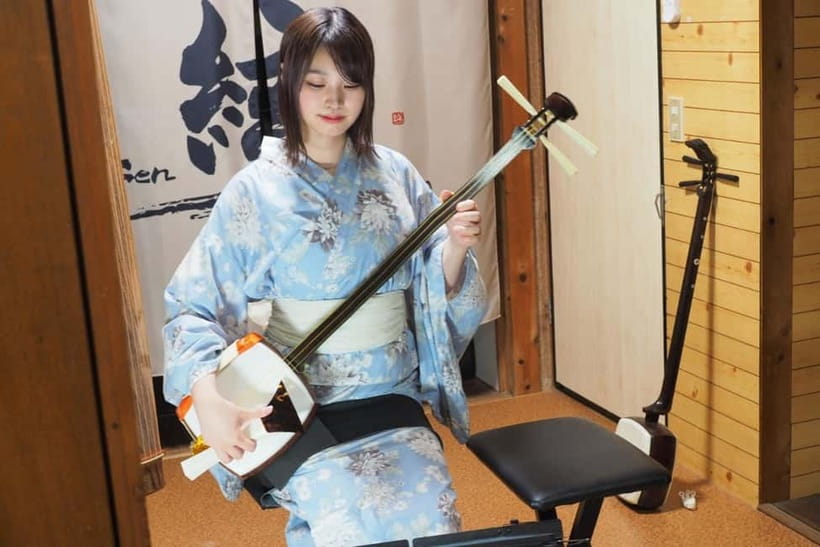
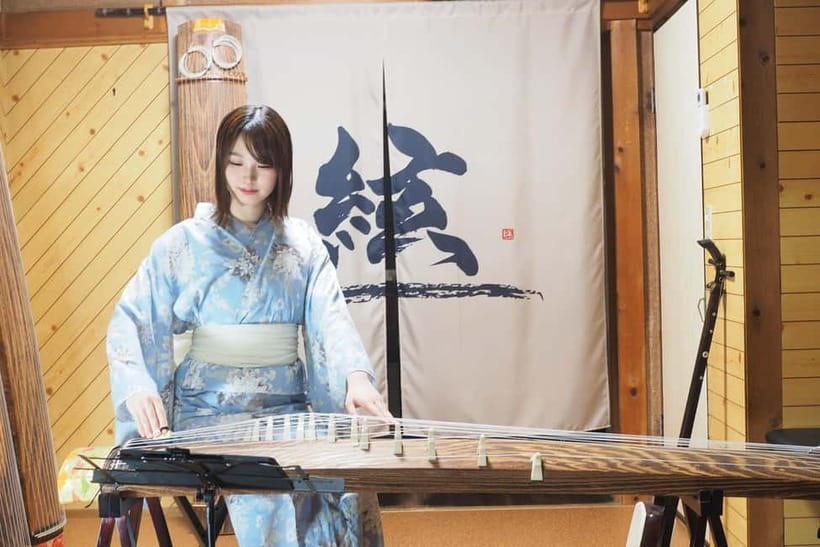
The koto and shamisen are both center stage, but what matters most is the contrast: the koto’s delicate, floating plucked tones versus the shamisen’s more direct, expressive bite. You also get context so the music stops being random “beautiful sounds” and starts sounding like a language you can follow.
You can also read our reviews of more tours and experiences in Kyoto.
Inside the Small Japanese House: What the Evening Feels Like
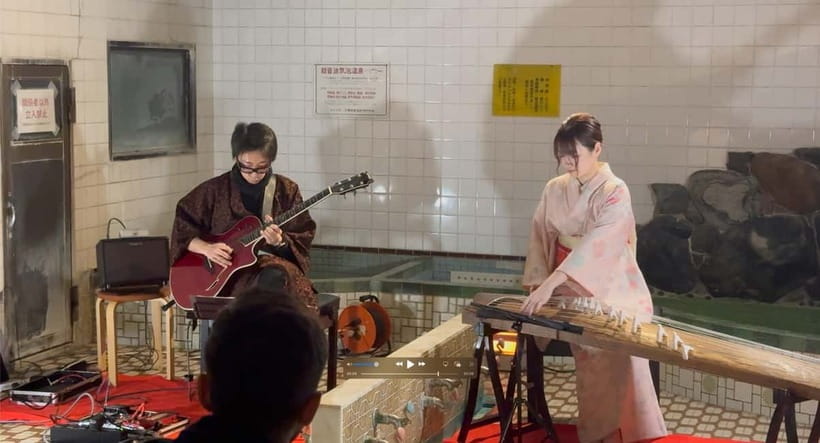
The concert is designed to feel like an evening at someone’s home. Reviews and the experience description point to a relaxed, family-warm vibe, not a scripted performance-with-no-connection setup. You’ll be in a cozy space that’s purposely kept small, which is why this doesn’t feel like a big mass-tour kind of event.
When you arrive, expect a warm welcome from the host (Gen is the listed provider) and a setup that’s more personal than formal. If you’re the type who gets more out of smaller experiences, this is your lane.
The Pre-Performance Intro: Koto, Shamisen, and Japanese Sheet Music
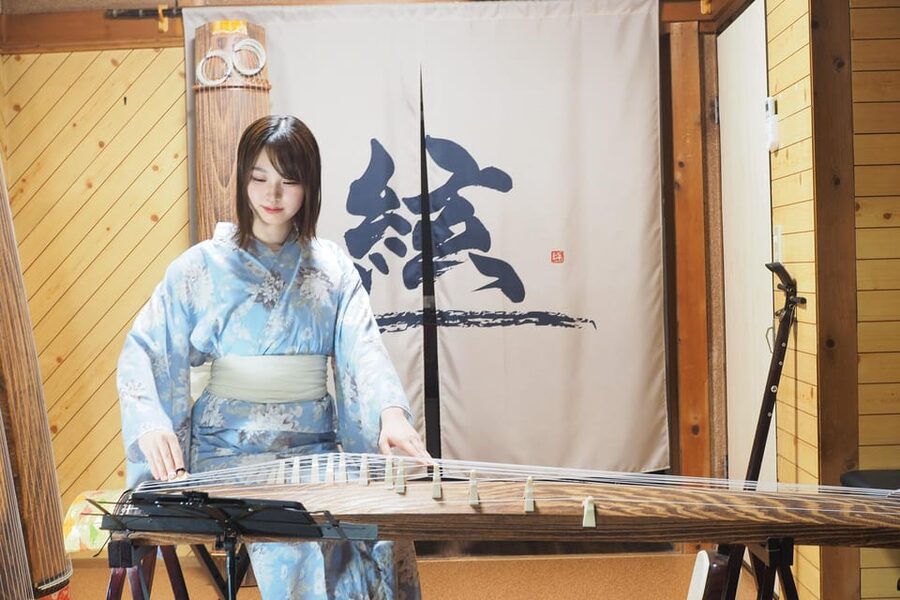
One of the strongest parts is the start of the program: a brief explanation of the koto and shamisen plus their unique sheet music. This matters because a lot of people come in with little or no background, and the show is built for that exact situation. You don’t need to know traditional theory to enjoy it—you just need to pay attention, and the guide gives you enough to do that.
The explanation isn’t just “these are instruments.” You’re shown how the sheet music works, so when a performer begins, you’re listening with a bit more structure. That shift makes the pieces more memorable, because you can sense when something changes and why.
The Live Set: Classical, Contemporary, and Original Pieces
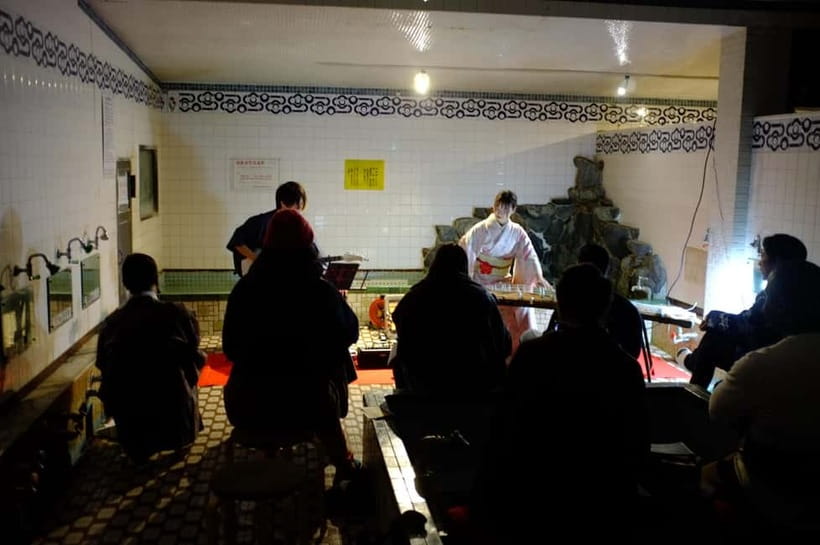
Then the performance begins, led by professional musicians. The repertoire can include classical pieces, contemporary compositions, and original works, and the program may change by season or performer. That’s a good sign for repeat visitors, but even for first-timers it prevents the night from feeling one-note.
In some sessions, the setlist leans more toward koto than shamisen (you may even hear mostly koto early on). If your heart is set on maximum shamisen time, I’d treat this as a balanced instrument concert rather than a shamisen-only showcase.
Still, the playing is the heart of it. In a small room, you can hear details that are easy to miss elsewhere—tiny shifts in timing, changes in tone color, and how the musicians shape the ending of each phrase. It’s the kind of sound that makes you realize how much storytelling can happen without a single spoken word.
Q&A and Photos: Turning a Concert Into a Conversation
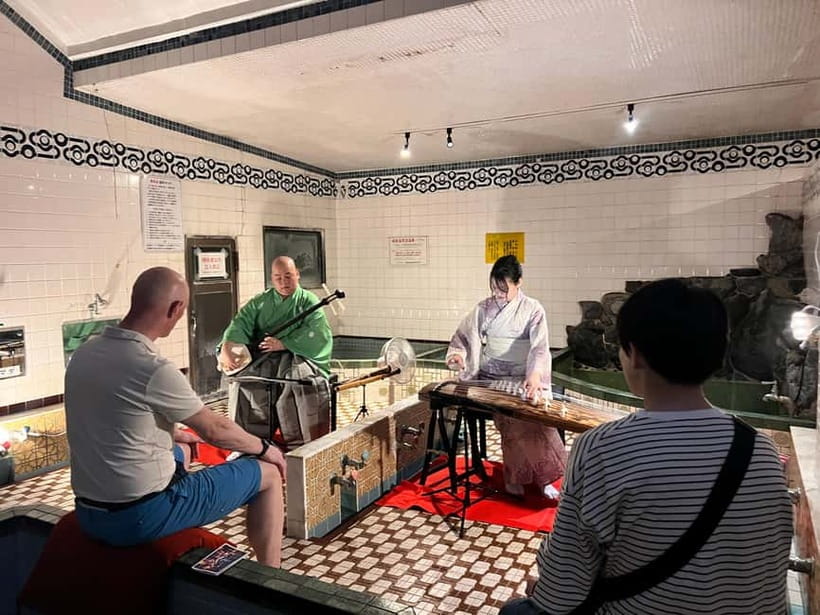
After the live performance, you get a Q&A session with the performers. This is where the experience earns points beyond the music, because it gives you a chance to ask practical questions—how a piece is approached, what to listen for, or what makes certain passages challenging.
There’s also time for photo-taking. It’s not just a quick “tourist photo and run”—the timing feels connected to the performance, so you’re still in that mood of curiosity. Some hosts also add an extra personal touch after the show (one account mentioned individual notes), which helps the evening feel human rather than transactional.
And yes, the experience highlights an opportunity to talk with a professional koto player. Depending on the session, that conversation can be more than a quick hello. In at least one instance, an audience member reported getting hands-on instruction for playing basics like sitting properly and plucking strings while reading sheet music. You might not get that in every session, but it’s exactly the kind of interaction this format can support.
Getting There: Use Kyoto’s Rail and Bus Hub as Your Guide
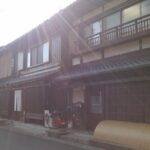
A heads-up: one downside that comes up is how tricky it can be to find the venue. It’s not a “big landmark on a street corner” kind of stop. So do this the smart way: plan your timing around nearby stations and build a little buffer.
Here are useful nearby anchors so you can stitch this into your day:
- Arashiyama (about 25 minutes by train and on foot): look for it from the Saiin Station area, where you can transfer easily between Hankyu Line and Randen Line.
- Nijo Castle (about 20 minutes by train and on foot): it’s easy from Nijo Castle-mae on the Tozai Line—just one station away from there.
- Kinkakuji (Golden Pavilion) (about 20–25 minutes by bus and on foot): it’s reachable from the Nishioji Sanjo bus stop in roughly 16 minutes.
- Nishiki Market (about 25 minutes by train and on foot): you can ride the Hankyu Line to Karasuma or Kawaramachi for easy access.
My advice: don’t stack another “must-see” right before this unless you like stress. Build your route so you arrive with time to breathe and get oriented.
Price and Value: Is $38 a Fair Trade in Kyoto?
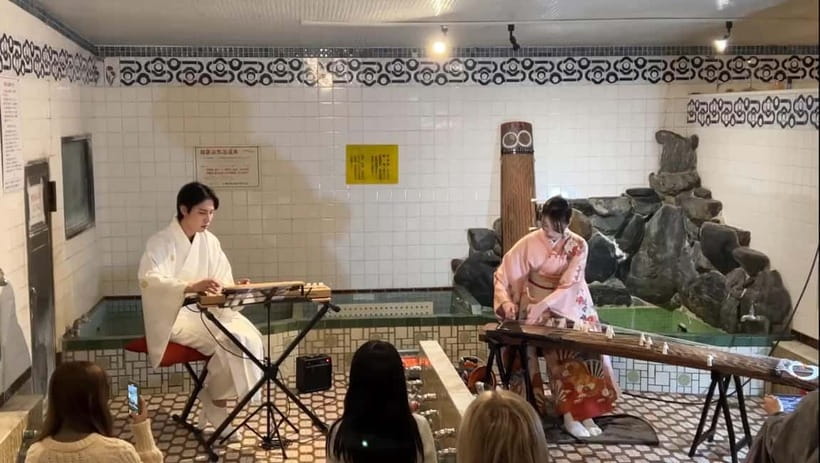
At $38 per person, this is positioned as a high-value cultural experience because you’re paying for three things that are hard to reproduce:
1) professional musicians,
2) a guided explanation that makes the music easier to follow,
3) a small-room setting that encourages real interaction.
A cheaper ticket might get you a performance, but this experience adds the layer of understanding. That’s a rare combo at this price point, especially in Kyoto where cultural events can jump in cost quickly. The 50–100 minute duration also helps: it’s long enough to get a full arc (intro, set, Q&A), but not so long that it becomes a full evening commitment.
Food and drinks are not included, so factor in a plan for water or a quick bite before or after. If you skip food planning, the show can still be great, but you’ll feel it if you’re hungry.
Who This Concert Suits Best (and Who Might Want Options)
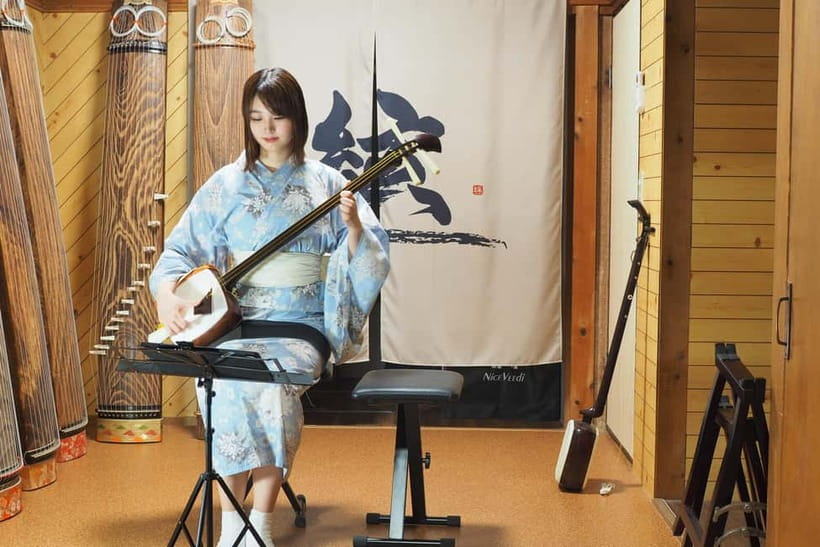
This experience is perfect for people who like close-up cultural moments. It also works well if you’re traveling with family, since the format is calm and approachable. You don’t need specialized knowledge, which is ideal for first-timers.
It’s especially good if you fall into one of these groups:
- You love music but don’t want a lecture-heavy museum stop.
- You want something Kyoto-authentic without standing in crowds.
- You like conversations and Q&A, not just passive watching.
Possible mismatch:
- If you want a massive, long program with lots of shamisen time, this may feel too short or too balanced toward koto on some nights.
- If directions make you tense, arrive early and give yourself extra time. One review called it worth the effort, but also noted it can be a bit hard to get to.
Practical Details You’ll Actually Care About
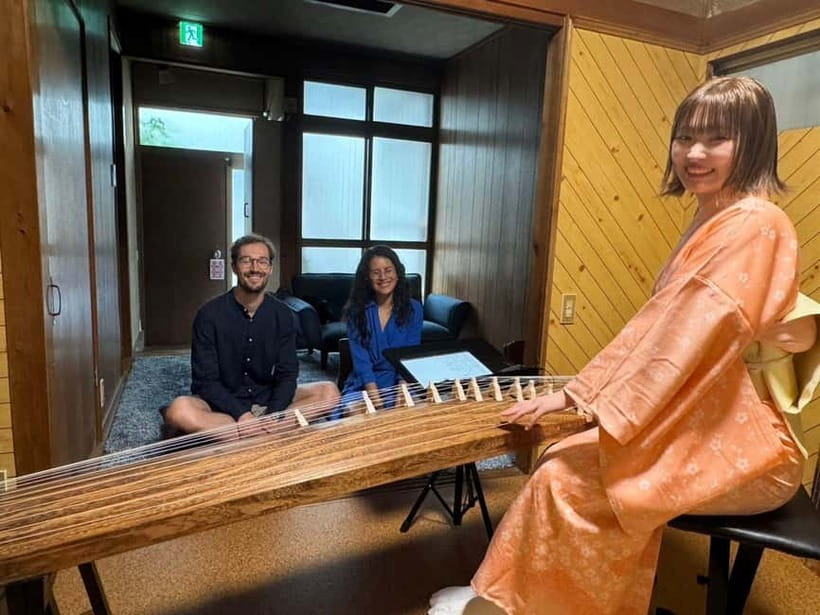
This is a concert in a small Kyoto home, with a duration of 50 to 100 minutes. Starting times vary, so check availability before you plan the rest of your day.
The host or greeter supports English and Japanese, so you won’t be left entirely on your own. The format offers private or small groups, which is part of why the atmosphere feels personal instead of crowded.
Not suitable for babies under 1 year. Everyone else should be fine as long as you’re comfortable with a small indoor seating setup.
Should You Book This Kyoto Traditional Instrument Concert?
Yes, if you want a Kyoto night that feels human and musical instead of big and distant. The best reason to book is the combination of up-close performance + instrument explanations + Q&A in a cozy home setting for a reasonable price.
I’d particularly recommend it if this is your first time hearing koto and shamisen. You’ll get just enough guidance to listen better, and you’ll leave with questions you actually asked.
If you’re the type who needs food included, has zero patience for finding smaller venues, or wants a long, shamisen-heavy set, you might choose a different kind of cultural activity. For most people who want authentic Kyoto in a single evening, this is a smart use of time.
FAQ
How long is the Kyoto Traditional Japanese Instrument Concert?
The concert lasts about 50 to 100 minutes. Starting times vary, so you’ll want to check availability for the exact schedule.
Where is the concert held?
It takes place in a cozy traditional Kyoto home. It’s described as different from the usual temple or townhouse sightseeing areas, with an intimate, family-at-home feel.
What instruments do you hear?
The performance features traditional Japanese instruments, especially koto and shamisen.
Do I need prior knowledge of Japanese traditional music?
No. The experience is designed for participants who may have little prior knowledge. You get a brief explanation during the program.
Is there an explanation of the instruments before the music?
Yes. The program starts with a short introduction to the instruments and their sheet music.
Do I get a chance to ask questions?
Yes. After the performance, there’s a Q&A session with the musicians.
Are photos included?
You’ll have an opportunity for photo-taking after the performance.
Is food included with the concert ticket?
No. Food and drinks are not included.
What languages are supported?
The host or greeter is available in English and Japanese.
Is it suitable for families?
It’s noted as a good match for families. Babies under 1 year are not suitable.
If you tell me your travel dates and which Kyoto sights you’re doing that day (Arashiyama, Nijo Castle, Kinkakuji, Nishiki Market, etc.), I can suggest a realistic time window to fit this in.