REVIEW · VIENNA
Vienna: Romantic Classics Piano, Violin, and Cello Concert
Book on GetYourGuide →Operated by Konzerte im Mozarthaus KG · Bookable on GetYourGuide
Love at first note happens fast. In Vienna’s Mozarthaus, you get an intimate 90-minute concert where the acoustics make details land clearly, and the program sweeps through big emotional hits like Beethoven, Chopin, Liszt, Schubert, and Brahms. I like that you can also choose how close you sit to the performers, so you’re not stuck with one viewing experience. One catch: because the room is small, picking cheaper student or back-row tickets means you may feel less physically close to the musicians.
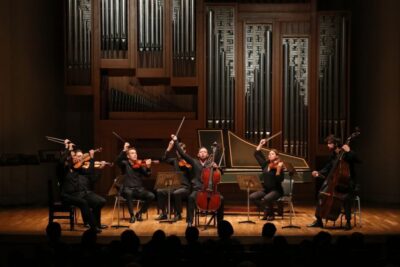
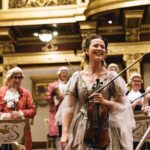
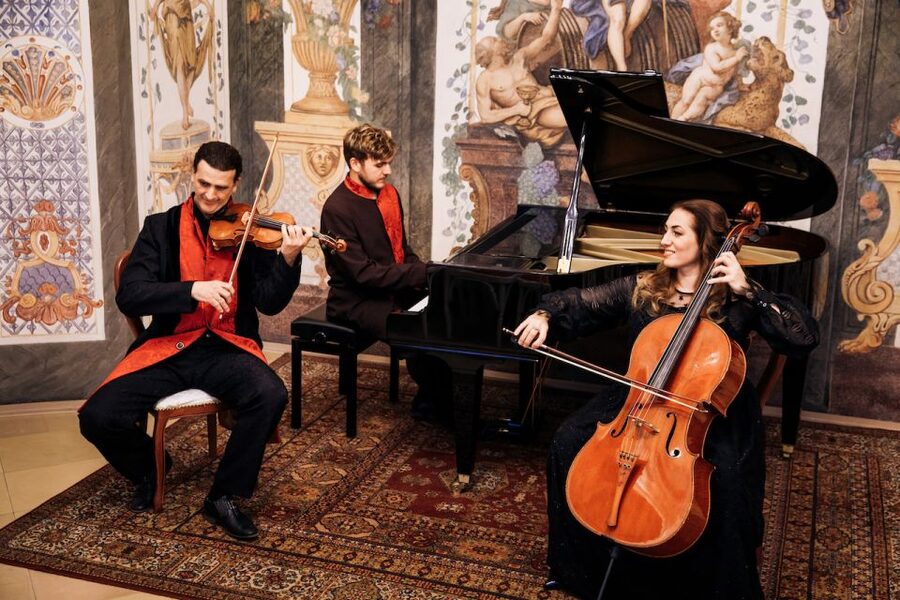
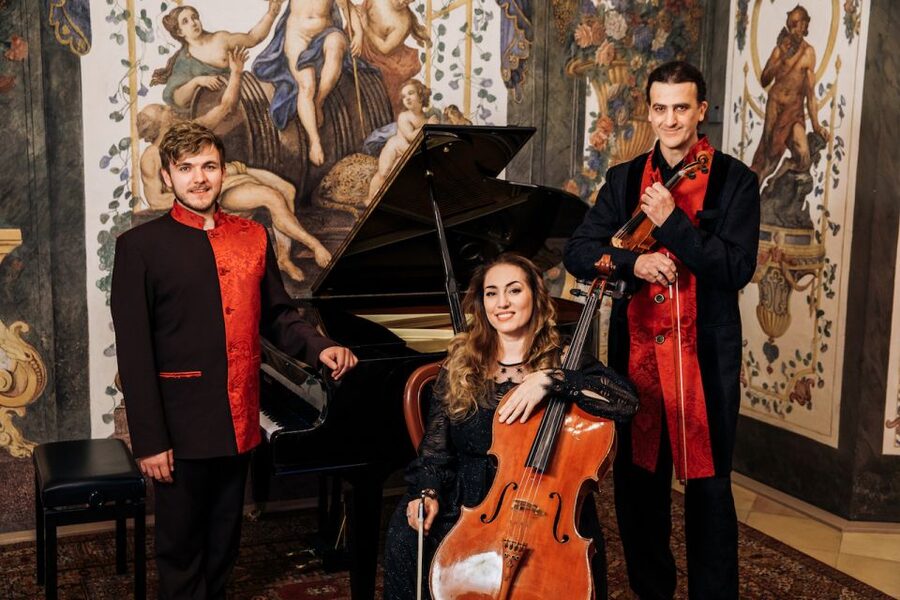
You’ll hear violinist Claudio Bentes, piano virtuoso Dushan Sretovic (especially for his Chopin flair), and soloist Teodora Miteva, plus cello and ensemble moments woven into a nonstop set of recognizable classics. The icing on the cake is the historic Sala Terrena look, including expressive frescoes that make the music feel extra theatrical without getting cheesy.
Plan for a simple, easy evening near St. Stephen’s Cathedral: arrive 15 minutes early, enter through the Deutschordenskirche gate (there’s a Mozarthaus concert poster stand there), and then settle in. The concert itself runs about 90 minutes, includes a cloakroom, and is hosted in English and German. Wheelchair access is available too.
In This Review
- Key things to know before you go
- Mozarthaus Sala Terrena: the intimate stage for romantic classics
- Getting there from St. Stephen’s: Deutschordenskirche gate meet-up
- The Sala Terrena frescoes: why the room feels part of the show
- Meet the musicians: Claudio Bentes, Dushan Sretovic, and Teodora Miteva
- Walk through the music: 90 minutes from Haydn to Schubert
- Haydn: Trio all’ungarese
- Beethoven: Moonlight Sonata and more brio
- Mozart: a playful title, classic craftsmanship
- Liszt and Chopin: love dreams and nocturnes
- Bach and Paganini: precision meets drama
- Saint-Saëns and Massenet: lyrical voices without the fuss
- Schubert: the evening’s quiet emotional landing
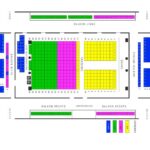
- Seat choice: student vs back row vs closer tickets
- Sound and pacing: why the evening feels nonstop
- Cloakroom and intermission: the small practical details
- Price and value: does $69 buy a great evening?
- Who should book this Romantic Classics concert
- Should you book it?
- FAQ
- How long is the Vienna Romantic Classics piano, violin, and cello concert?
- Where do I meet for the concert?
- When should I arrive?
- What’s included in the ticket?
- Who performs in the concert?
- What languages are offered by the host or greeter?
- Is it wheelchair accessible?
- What music will be performed?
Key things to know before you go
- Historic Mozarthaus setting with expressive frescoes in the Sala Terrena
- Clear acoustics in a small room, so you catch nuance, not just volume
- Major composers, tightly packed: Beethoven, Chopin, Mozart, Liszt, Schubert, Brahms, plus more
- Named performers including violinist Claudio Bentes and pianist Dushan Sretovic
- Seat choice changes the vibe between student/back row and closer seats
- Cloakroom included so you can travel light for the concert
Mozarthaus Sala Terrena: the intimate stage for romantic classics
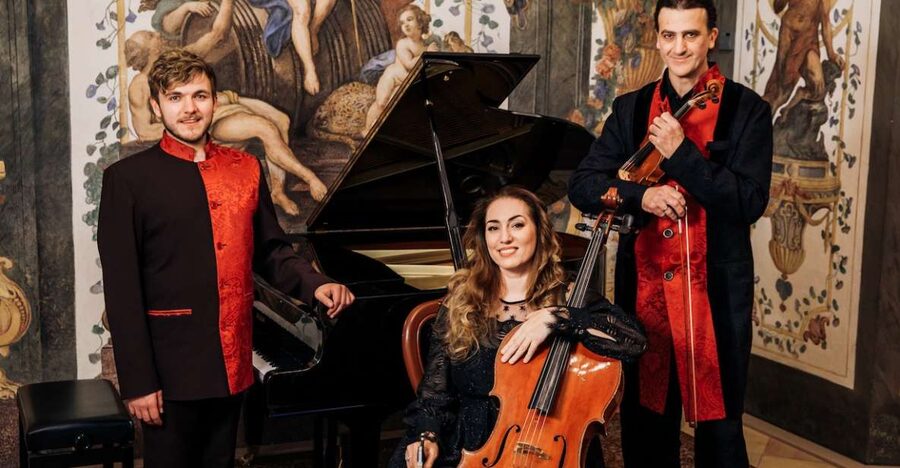
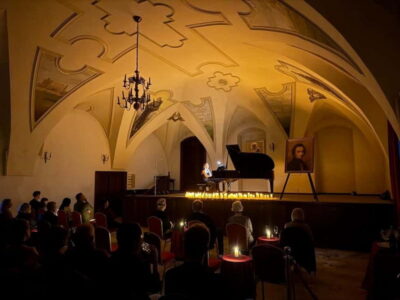
If you want a Vienna evening that doesn’t require trains, tickets, or time wasted hunting for the right room, this concert checks the box. The big thing here is the feel: the Mozarthaus presentation keeps you close enough to sense musical intention. In a small venue, the sound tends to arrive cleanly, and you can hear how performers shape phrasing and dynamics.
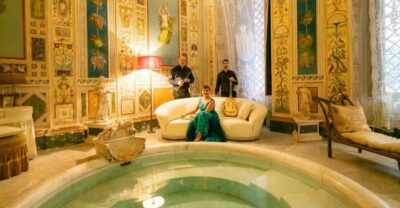
The other standout is visual. The concert is set in the Sala Terrena, known for expressive frescoes. You’re not just sitting in front of a music stand in a white-walled box. The room gives the listening a stage-like quality, so the romance in the music has a matching mood in the background.
That matters more than people think. When the room looks and sounds intimate, you stop treating the program like a checklist of famous names and start listening for emotions: the gentler parts of a slow movement, the quick lift when a melody turns, and the moment virtuosity becomes storytelling instead of just speed.
You can also read our reviews of more tours and experiences in Vienna.

Getting there from St. Stephen’s: Deutschordenskirche gate meet-up
The meeting point is designed to be painless. The concert venue is about 150 meters from St. Stephen’s Cathedral, and the easiest way to find it is to aim for the Deutschordenskirche side gate.
Here’s what to do:
- Arrive 15 minutes before the concert starts.
- Enter via the Deutschordenskirche gate.
- Look for the poster stand for concerts at Mozarthaus near that entrance.
This timing isn’t about bureaucracy. It’s about settling in before the room fills, checking your seat position, and getting comfortable enough that the first notes land without distractions.
Language support is also practical. The host or greeter is available in English and German, which helps if you need directions, seating clarification, or general info.
The Sala Terrena frescoes: why the room feels part of the show
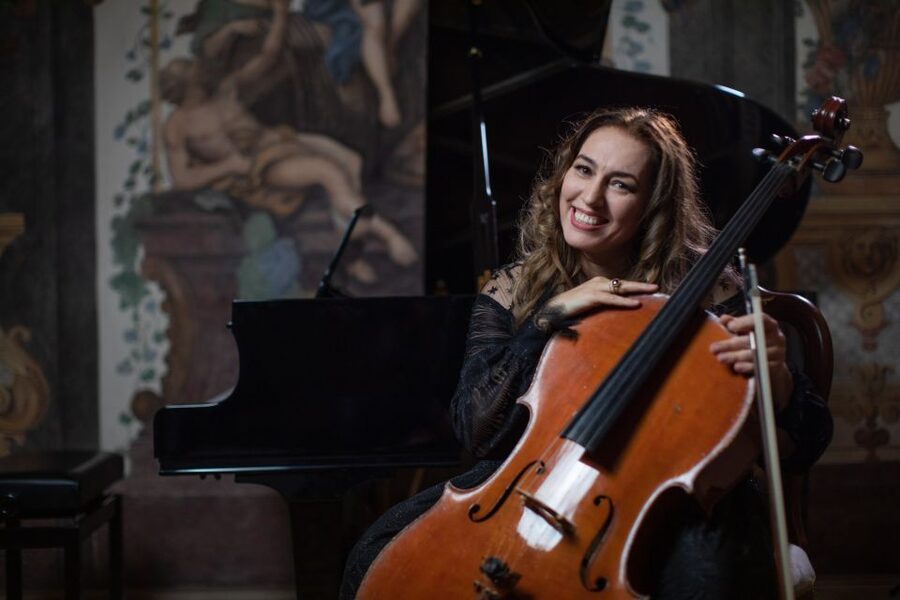
Let’s talk atmosphere, because this is where this concert goes beyond a typical ticketed performance.
Those frescoes in the Sala Terrena don’t just photograph well. They also make the music feel more connected to the time period that created it. Beethoven, Chopin, Mozart, Schubert—these composers didn’t write for bland rooms. They wrote for spaces where people could be moved, surprised, or soothed. Even if you’re not thinking about art history while the players tune up, the visual setting helps your brain accept the music as theatre.
The result: you’re likely to listen longer and more actively than you would in a larger hall where sound travels and blends more. In a smaller, frescoed room, you tend to notice expressive detail: lighter touches on the keyboard, bow changes, and the way a melody seems to lean forward.
Meet the musicians: Claudio Bentes, Dushan Sretovic, and Teodora Miteva
This program isn’t anonymous background music. You’re seeing performers with real reputations.
- Claudio Bentes (violin) brings the expressive spine to the concert. The violin takes on both lyric lines and showpiece passages, which fits the Romantic Classics theme perfectly.
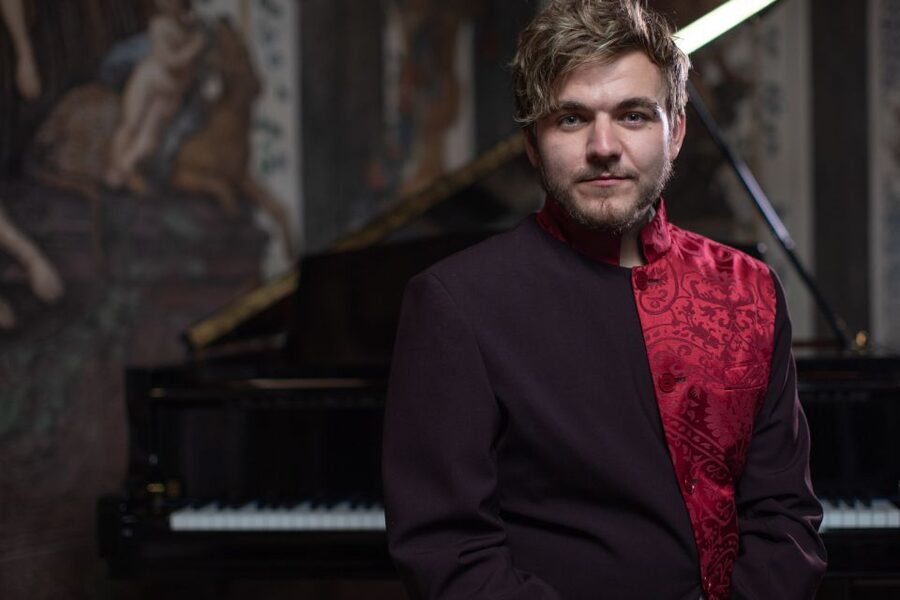
- Dushan Sretovic (piano) is the major star draw if you love how Chopin should sound: singing, colored, and full of contrast. If Chopin is your comfort composer, this is the part of the program you’ll look forward to the most.
- Teodora Miteva (soloist) adds another layer to the variety of the evening. Your program includes vocal-flavored works like Massenet’s Thais Meditation, so having a competition-winning soloist in the mix makes the emotional center land cleanly.
The concert also features a cello and ensemble moments based on the works performed, including Bach’s cello suite and additional keyboard-and-string writing. Even if you don’t know every piece going in, the set is built to keep you oriented: violin for expression, piano for motion and drama, and cello for a deeper, warmer tone.
Walk through the music: 90 minutes from Haydn to Schubert
This isn’t a single-composer program. It’s a Romantic Classics playlist with classical backbone, designed so your attention keeps getting rewarded.
The set starts with a chamber-style energy from J. Haydn, then moves into major Romantic moods—tenderness, dreaming, lightning-quick virtuosity, and then back toward lyrical reflection.
Here’s the program flow and what each stop feels like:
Haydn: Trio all’ungarese
J. Haydn, Trio all’ungarese (Hob XV:25) opens with movement changes that keep the pulse lively:
- Andante – Poco Adagio – Finale, Rondo
You get a strong sense of structure early. Even before the big Romantic names arrive, Haydn helps set expectations: this concert will be musical, not just loud.
Beethoven: Moonlight Sonata and more brio
Then comes the emotional signature of Beethoven:
- Moonlight Sonata – Adagio
This is the kind of movement where your listening changes. You stop waiting for fireworks and start catching tiny shifts: tension releasing, melody breathing, and the piano sounding both intimate and inevitable.
Later you also get:
- Beethoven, Sonate op.2 (Allegro con brio)
That contrast matters. It’s one of the smartest ways to program Beethoven in a short concert: you move from quiet intensity to kinetic confidence without the pacing feeling rushed.
Mozart: a playful title, classic craftsmanship
The program includes:
- W. A. Mozart, La tartine de beurre – Das Butterbrot
The title is playful, but the musical intent is still classical craft. In a concert like this, pieces with lighter or charming character act like a palate cleanser. They reset your ear so the next Romantic surge hits harder.
Liszt and Chopin: love dreams and nocturnes
Then the Romantic mood deepens:
- F. Liszt, Un sospiro
- F. Chopin, Nocturne in C minor op. 48/1
- F. Chopin, Étude op. 10/1 in C major
Liszt’s Un sospiro (one breath) typically lands as a concentrated expression—small in scale, big in feeling. After that, Chopin’s Nocturne in C minor is your long, singing corridor, the sound of late-night reflection.
Then you get the switch to technical poetry with Chopin’s Étude in C major. That’s where you’ll hear how a virtuoso pianist turns difficulty into musical shape, not just speed.
Bach and Paganini: precision meets drama
The concert shifts tones through:
- J. S. Bach, Cello Suite in G Major BWV 1007 – Allegro
- N. Paganini, Caprice 13
Bach gives you clarity and line. Paganini brings the electricity. In a short 90-minute set, this is a strong pivot: you’re shown how different centuries handle expressiveness—by disciplined pattern in Bach, and by daring flair in Paganini.
Saint-Saëns and Massenet: lyrical voices without the fuss
Then you reach two famous, emotionally direct pieces:
- C. Saint-Saëns, The Swan
- J. Massenet, Thais – Meditation
These are the kind of works that stick to your brain after the concert ends. The Swan is all about grace and sustained line, while Thais Meditation leans into a tender, vocal-like phrasing that fits well with a soloist’s presence.
Schubert: the evening’s quiet emotional landing
Finally, you close with:
- Franz Schubert, Trio in Es Major op. 100 – Andante con moto
Schubert endings often feel like they’re carrying emotion forward rather than shutting it off. This choice is a good way to end a Romantic Classics concert because it leaves you in a reflective state, not a purely triumphant one.
Seat choice: student vs back row vs closer tickets
This is one of the practical decisions that can change your enjoyment.
Because the venue is relatively small, you can actually feel the performance more when you sit closer. You’re better positioned to see:
- bow contact and subtle gestures,
- how the pianist shapes dynamics,
- and the way performers communicate during transitions.
So here’s how I’d choose:
- Pick closer tickets if you care about detail and want the music to feel physically present.
- Pick back row or student tickets if you mainly care about the sound and want the best price, and you don’t mind feeling a bit farther away from the action.
The good news? Even in a smaller room, the acoustics are reported as excellent, so you’re not gambling on whether you’ll hear every note. The difference is mostly about closeness and sightlines.
Sound and pacing: why the evening feels nonstop
A 90-minute concert can be either a satisfying short story or a slow endurance test, depending on acoustics and programming.
This one is built for momentum. The set moves between:
- slow, reflective Romantic movements (like Beethoven’s Moonlight Sonata and Massenet’s Meditation),
- to faster, more rhythmic energy (including Haydn and Beethoven’s Allegro con brio),
- then into virtuoso turns (Paganini’s Caprice, Chopin’s Étude).
Add in a venue where the sound is clear, and you get the kind of experience where you don’t feel yourself waiting for the next big moment. Instead, you feel carried forward.
Cloakroom and intermission: the small practical details
Included with your experience is a cloakroom, which is a gift in Vienna when weather can shift fast and you don’t want bulky items on your lap.
Intermission is part of the flow, but keep expectations realistic: refreshments are not described as a full restaurant setup. One practical tip from the experience style: if you plan to buy drinks during the break, have some cash on hand. At least one account noted that purchasing refreshments outside felt cash only.
If you’re someone who hates last-minute money stress, that’s an easy fix: bring a bit of cash, even if you also plan to use card elsewhere.
Price and value: does $69 buy a great evening?
At $69 per person for about 90 minutes, you’re paying for three things at once:
- A major-composer program with recognizable names (Beethoven, Chopin, Mozart, Liszt, Schubert, and more).
- Live performance in an intimate Mozarthaus setting.
- A format that doesn’t drag. You get a complete musical arc without spending your whole night in a hall.
In other words, this isn’t a bargain bargain, but it’s not priced like an all-day event either. For Vienna, it’s a reasonable way to get a focused classical evening with strong performers and clear sound.
The best value often comes from seating choice. If closer seats are within reach, the intimacy payoff can be worth it. If not, back row or student tickets can still deliver excellent listening, because the acoustics are strong.
And with a strong overall rating (4.7 across many bookings), the recurring theme is consistency: good sound and skilled musicians in a venue that feels special.
Who should book this Romantic Classics concert
Book it if:
- You want an easy, central Vienna evening near St. Stephen’s.
- You like Romantic-era emotion, not just technical showpieces.
- You’re a first-time classical concert visitor who appreciates clear program variety.
- You enjoy hearing familiar composers in a tight, well-paced sequence.
Consider passing if:
- You need a large concert hall experience. This is built for closeness.
- You’re very sensitive about sightlines. Cheaper seat options may reduce how much you see the musicians’ gestures.
- You dislike the idea of cash-only purchases for break extras. (You can solve this with small planning.)
Should you book it?
Yes, if your goal is a high-quality, emotional classical evening that fits neatly into a Vienna itinerary. The combination of intimate Mozarthaus acoustics, Sala Terrena atmosphere, and a program packed with Beethoven, Chopin, Mozart, Liszt, Schubert, and more makes it a strong choice for couples, music lovers, and anyone who wants a memorable night without complicated logistics.
If you’re on the fence, choose seats based on what you care about most: close-up visual connection versus maximum savings. Either way, you’re listening to big names in a setting that’s designed for hearing the details.
FAQ
How long is the Vienna Romantic Classics piano, violin, and cello concert?
The concert lasts 90 minutes.
Where do I meet for the concert?
The venue is about 150 meters from St. Stephen’s Cathedral. Enter through the gate at Deutschordenskirche, where you’ll find a poster stand of concerts at Mozarthaus.
When should I arrive?
Please arrive 15 minutes before the concert starts.
What’s included in the ticket?
The ticket includes a cloakroom and the concert.
Who performs in the concert?
The concert features violinist Claudio Bentes, piano virtuoso Dushan Sretovic, and soloist Teodora Miteva, with additional pieces performed as part of the program.
What languages are offered by the host or greeter?
The host or greeter speaks English and German.
Is it wheelchair accessible?
Yes, the concert venue is wheelchair accessible.
What music will be performed?
The program includes works by Haydn, Beethoven, Mozart, Liszt, Chopin, Bach, Paganini, Saint-Saëns, Massenet, and Schubert, including Beethoven’s Moonlight Sonata and Schubert’s Trio in Es Major.