REVIEW · CHENGDU
Chengdu Signature Opera Face Changing and Tea
Book on Viator →Operated by SUKHA Travel · Bookable on Viator
Shufeng Yayun turns a regular evening into something memorable. I love seeing the face-changing artistry in a real Sichuan folk-opera setting, and I also like the calm pacing that comes with tea time in Qingyang Palace. One thing to plan for: it runs about 80 minutes, so it’s best when you’re ready to sit still and watch.
The show itself is built for your attention. You’ll catch a structured program that includes an opening drum-and-gong segment (Nao Tai), a short play, and traditional music such as huqin, then the headline acts with fire and quick costume surprises. The tea service is part of the experience too, with a gaiwan-style moment and a complimentary covered-bowl tea, so you get a slower, local rhythm alongside the spectacle.
In This Review
- Key things to know before you go
- A quiet stage inside Qingyang Palace
- What happens in the 80-minute Sichuan opera program
- Face-changing: the signature moment you plan for
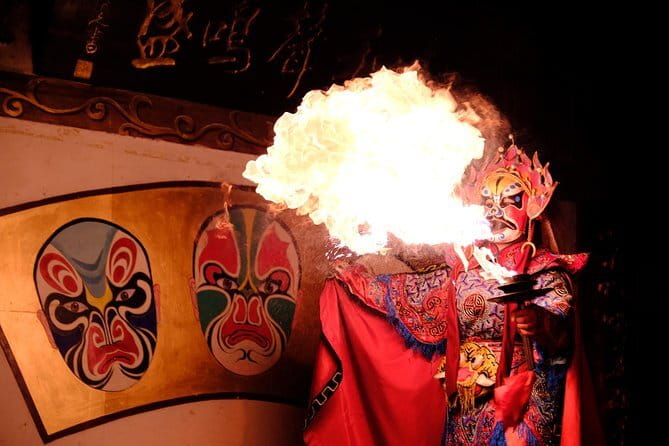
- Fire-breathing and the other drama you’ll remember later
- Tea time: gaiwan and covered-bowl tea that slows your pace
- Optional VIP perks if you want more than watching
- Cost, value, and what $18 really covers
- How to fit Shufeng Yayun into your Chengdu evening
- Who this is best for (and when to skip it)
- Book it or pass: my decision guide
- FAQ
- How long is the Sichuan opera performance?
- What time does the experience start?
- Where do I redeem my ticket?
- What’s included in the $18 price?
- What extra options are available with a VIP ticket?
- Does the experience depend on weather?
- Can I cancel for a full refund?
Key things to know before you go
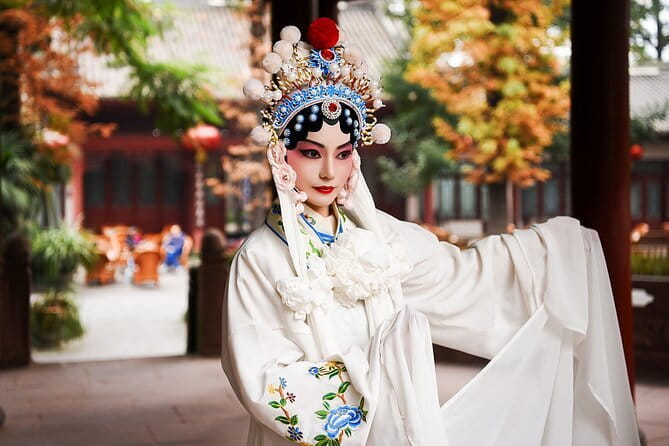
- Shufeng Yayun inside Qingyang Palace: a historic setting near central Chengdu sights
- Face-changing plus fire acts: the signature Sichuan opera moments happen live on stage
- Tea is included: you get a complimentary bowl of covered-bowl tea with the show
- A clear 80-minute flow: opening drum/gong (Nao Tai), one-act drama, then music and highlights
- VIP add-ons exist: optional costume dressing and a choice like back massage or ear cleaning (if selected)
A quiet stage inside Qingyang Palace
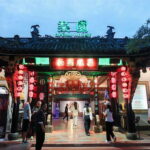
Chengdu’s Sichuan opera isn’t just about what’s onstage. The best part is where you watch it. Shufeng Yayun sits within the ancient grounds of Qingyang Palace, so the whole evening feels slower than a typical theater night in a modern building.
The venue has the feel of a traditional folk arts space with simple architecture and a dignified, unhurried mood. It’s also been around since 1998, which matters because it signals continuity, not a one-off performance for tourists. You’re in an old cultural pocket near major classics like Wuhou Shrine and Du Fu Thatched Cottage, so this is easy to pair with a day of sightseeing and then shift into a more relaxed evening plan.
Also, the night is timed to match Chengdu life. Starting at 8:00 pm, it gives you space to wrap up your day first, then settle in for the show without rushing.
You can also read our reviews of more tours and experiences in Chengdu.
What happens in the 80-minute Sichuan opera program
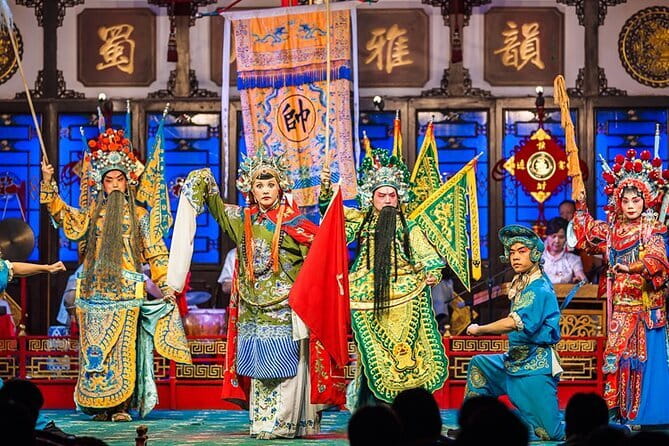
You’re looking at about 1 hour 20 minutes of live performance, with a set structure that helps you follow even if your Chinese isn’t strong. Here’s the basic sequence you can expect:
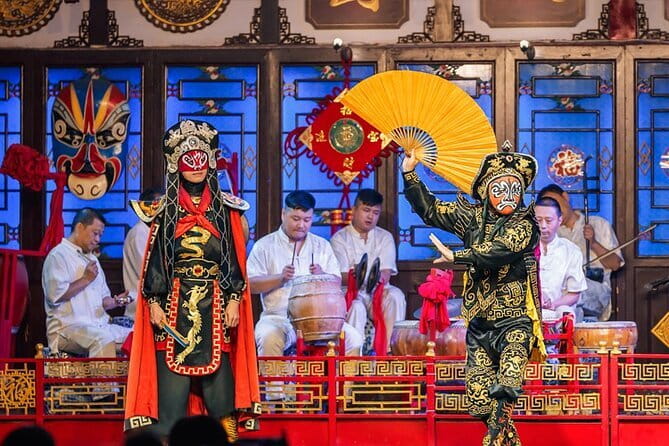
First comes the opening drum and gong performance, called Nao Tai. This isn’t background noise. It’s part of how the performance announces itself—rhythm, intensity, and that very old-school stage presence.
Then you get a one-act play segment. This is where the storytelling energy shows up, setting the stage for the bigger signature acts afterward.
After that, you’ll hear huqin, the traditional string instrument that’s common in Chinese opera. It helps connect the drama and the spectacle, so the show doesn’t feel like random clips stuck together.
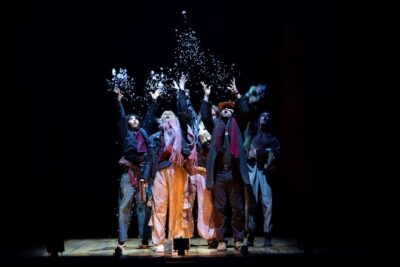
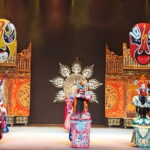
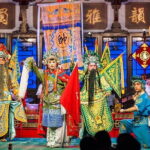
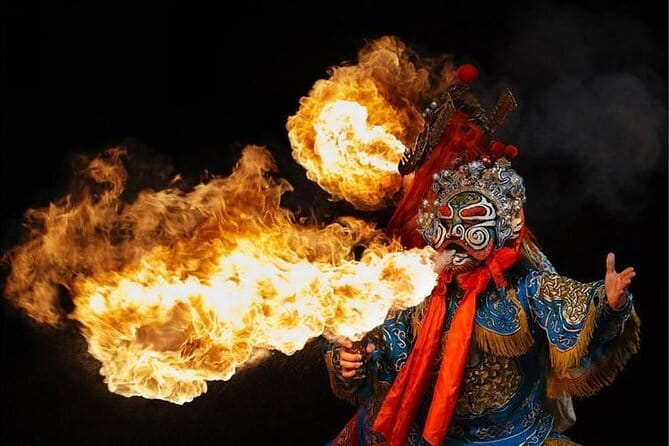
From there, the program continues into the headline performance style you came for: the classic Sichuan opera highlights like face-changing plus other dramatic acts including fire-breathing, and in the overall entertainment mix you may also see elements like shadow puppetry. The pacing is designed so you’re constantly getting new visual beats—close-range costumes, sudden transitions, and stage effects.
Face-changing: the signature moment you plan for
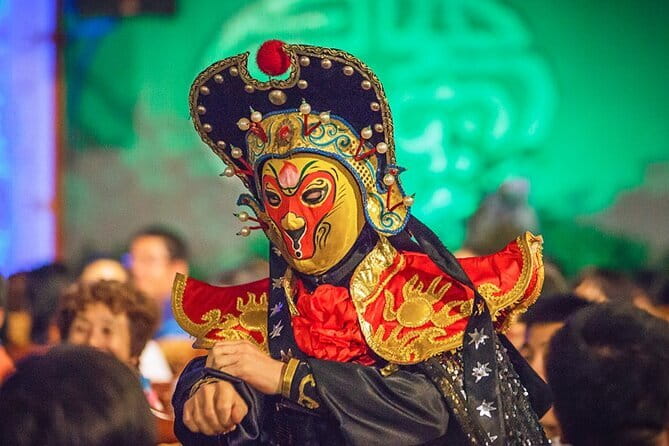
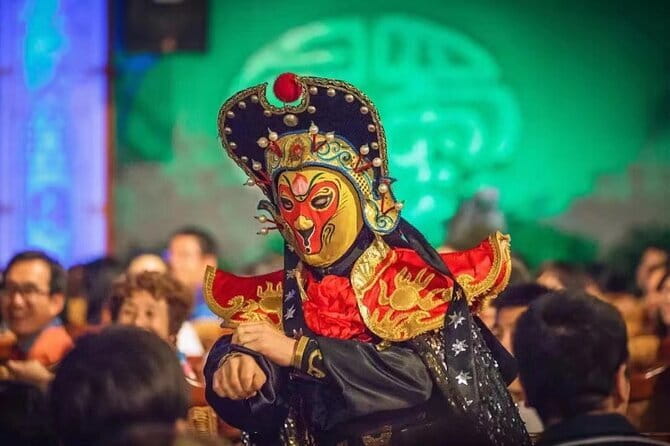
Let’s talk about the reason most people book this. Face-changing is the headline. It’s fast, precise, and theatrical in a way that’s hard to summarize until you see it live.
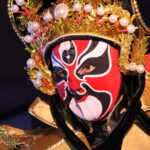
In practice, the trick is that the change feels immediate and almost impossible to track. One minute the actor’s face looks one way, and the next it’s gone—replaced with another expression and another mask-like look. The show builds tension through performance timing, then releases it through these sudden transformations.
I love that the venue doesn’t treat face-changing like a separate stunt you watch from a distance. It’s folded into the flow of the opera performance, so it feels like part of the acting style rather than a quick magic show break.
If you’re the type who enjoys moment-to-moment stagecraft—costume timing, actor control, and how traditional opera uses your eyes—this will click fast.
Fire-breathing and the other drama you’ll remember later
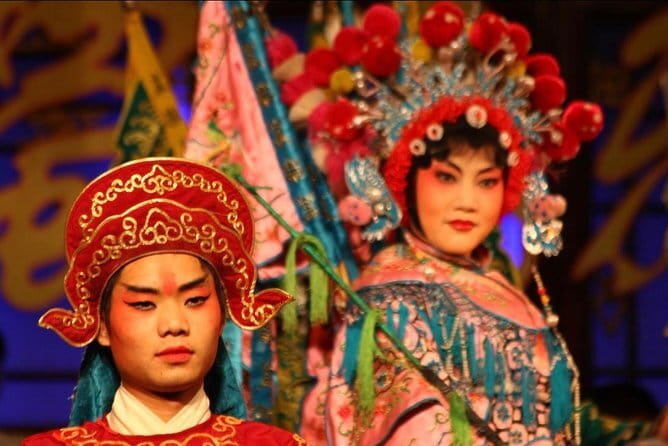
The show also includes high-energy dramatic acts like fire-breathing. This is the part where you can feel the audience shift from focused watching to involuntary attention. Even if you know it’s coming, the live effect can surprise your body—eyes widen, then you lean forward.
And the overall entertainment mix is more than just face-changing and fire. The program approach is classic Sichuan opera: music and performance elements work together, and the staging stays close enough that you feel part of the same room energy.
One note: fire acts are inherently attention-grabbing, so if you’re sensitive to intense stage effects, you might want to mentally brace for that peak moment. But if you like spectacle with real performers—this is a strong match.
Tea time: gaiwan and covered-bowl tea that slows your pace
This isn’t a show where you forget the food and drink completely. Tea is built into the experience, and that’s a win for anyone who gets tired of eating on the run.
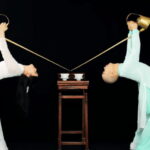
You’ll get a tea experience that includes gaiwan tea (served in the traditional lidded style) and a complimentary bowl of covered-bowl tea included with your ticket. The point isn’t just hydration. It’s a way to add Chengdu’s relaxed rhythm between performance beats.
I like this because tea makes the night feel less like a rush to the highlights. You can watch, then sip. You can catch a shift in acting style, then reset your attention. It’s a small detail that changes the mood of the whole evening.
Also, if you’re curious about Sichuan culture beyond the obvious tourist stops, tea is a practical way in. You don’t need special knowledge to enjoy it—you just need to be willing to slow down.
Optional VIP perks if you want more than watching
Not all tickets are equal here, and that’s where you can tailor the experience. The baseline experience includes your Sichuan opera ticket and the covered-bowl tea.
If you choose a VIP ticket option, you can add hands-on extras such as:
- Back massage OR ear cleaning OR a drama bookmark (as a VIP add-on)
- Costume dressing experience (VIP selection)
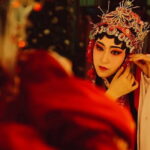
This is the kind of upgrade that can make the night feel personal. Watching is fun, but getting dressed in opera-style costume and adding a live interactive element changes how you remember the show. It turns your experience into something more like participating in performance culture than just observing it.
Two caution notes:
- Costume dressing photography with makeup and background is not included, so if you want photos made with extra production, you may have to pay for that separately.
- Choose your VIP add-on based on your comfort level. Ear cleaning and back massage are not every visitor’s idea of relaxing, even if it sounds like a fun tradition.
Cost, value, and what $18 really covers
The price is $18, and for Chengdu that’s a pretty straightforward value deal because your ticket includes the show plus tea. You’re not paying extra just to sit in the room and watch a signature performance. The included covered-bowl tea matters too, because it keeps you in the local rhythm instead of treating the tea as an afterthought.
Think of it like this: you’re paying primarily for the live Sichuan opera, then the tea is part of the package. That’s a smart way to spend money if you’re building an itinerary of experiences rather than things you buy.
If you want the hands-on parts—especially costume dressing or the interactive add-ons—VIP can be worth it. But if your priority is just the opera highlight and you’d rather avoid extra activities, the standard experience is already doing the heavy lifting.
How to fit Shufeng Yayun into your Chengdu evening
Start time is 8:00 pm, and the total runtime is about 80 minutes. That makes it an ideal stop after a day of sights.
I’d plan it like this:
- Keep your daytime flexible for Wuhou Shrine and Du Fu Thatched Cottage (both are close enough to make pairing easy).
- Use the evening show to shift gears from walking to sitting.
- Arrive with a little cushion so you can settle in before the opening drum-and-gong segment (Nao Tai).
The venue is also near public transportation, which matters if your plan depends on not spending extra time negotiating rides. And it’s generally suitable for most travelers, especially anyone who enjoys live performance even when you can’t catch every word of dialogue.
If you hate waiting around, this is still manageable because the show has a clear structure and the big moments land during the performance itself.
Who this is best for (and when to skip it)
This works best if you’re excited by:
- Live stage performance and traditional drama
- Signature Sichuan opera techniques like face-changing
- A cultural experience that includes a tea moment, not just a timed event
It’s also a good pick for first-timers to Sichuan opera. The performance format is built to be understood through action, music, and stagecraft, even if you don’t read Chinese opera script.
You might skip it if:
- You dislike theater experiences where you can’t control the pace (it’s a live show, so you sit through it)
- You want a purely sightseeing walk-through, not a seated performance night
- You strongly prefer not to participate in any VIP-style interactive elements (though those are optional)
Book it or pass: my decision guide
I’d book Shufeng Yayun if you want one evening that gives you both spectacle and local culture, without turning your plan into a frantic checklist. The combination of face-changing, fire-breathing style drama, and a real tea service in a historic Qingyang Palace setting is a good package for the money.
I’d pass if your priority is only quiet museums and you don’t want to commit to sitting for about 80 minutes. This is a show-first experience, not a casual browse.
If you’re undecided, choose based on your comfort with the idea of opera. If the thought of traditional performance plus tea makes you curious, this is an easy yes.
FAQ
How long is the Sichuan opera performance?
The show is approximately 1 hour 20 minutes.
What time does the experience start?
The start time is 8:00 pm.
Where do I redeem my ticket?
You redeem at Shufengya Yun, 132 Qin Tai Lu, 草堂餐饮娱乐圈 Qing Yang Qu, Cheng Du Shi, Si Chuan Sheng, China, 610032.
What’s included in the $18 price?
The included items are the Shu Feng Ya Yun Sichuan Opera Ticket and a complimentary bowl of covered-bowl tea.
What extra options are available with a VIP ticket?
With a VIP ticket option, you may get a back massage OR ear cleaning OR a drama bookmark, and you can also add a costume dressing experience. Costume dressing photography is not included.
Does the experience depend on weather?
Yes. The experience requires good weather. If it’s canceled due to poor weather, you’ll be offered a different date or a full refund.
Can I cancel for a full refund?
Yes, you can cancel for a full refund up to 24 hours in advance of the start time. If you cancel within 24 hours, it won’t be refunded.